

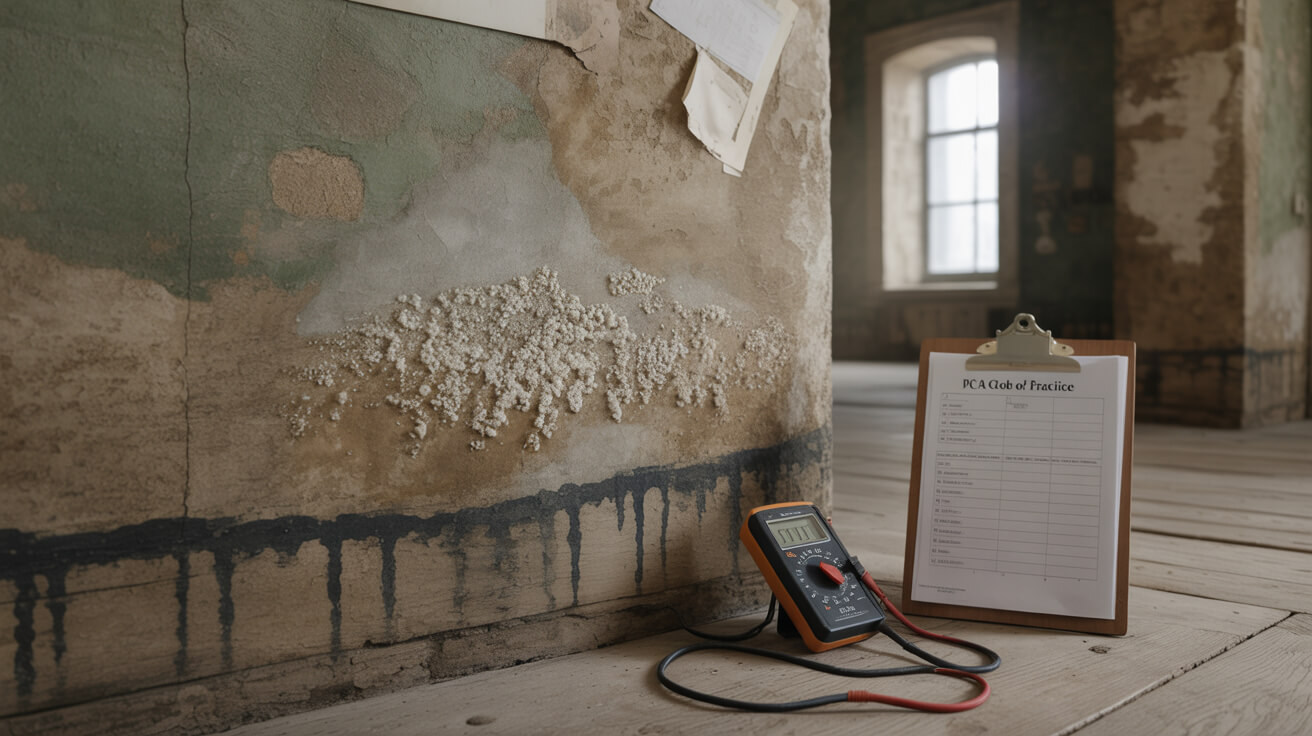
The Code provides a cohesive framework aimed at balancing contemporary building science with the conservation requirements of heritage assets. It ensures that damp proofing processes are not only technically effective but also sensitive to the materials and historical integrity of aged buildings.
This article presents a comprehensive, neutral account of the PCA Code of Practice. It details the regulatory framework, historical evolution, and practical applications of the Code in the context of damp proofing for heritage properties. By integrating established standards with measured diagnostic methodologies, the PCA Code plays a crucial role in preserving the structural and cultural value of listed buildings.
Etymology or Name Origin
The name “PCA Code of Practice” originates from a collaborative initiative by industry bodies and regulatory agencies dedicated to developing unified procedures for damp proofing. Initially conceived as a practical guideline, the term evolved through successive revisions and widespread industry adoption. Historical documentation indicates that the Code’s nomenclature reflects both the procedural emphasis and the institutional backing that have come to define its role in heritage conservation.
Overview / Context
The PCA Code of Practice functions as a cornerstone in the field of damp proofing, especially within the sphere of heritage conservation. It establishes a standard protocol that acknowledges the unique challenges associated with damp issues in historical structures, such as the delicate balance between intervention and preservation.
The Code is interwoven with a range of industry standards including BS6576, BS8102, and PAS2035, as well as regulatory measures like the HHSRS and listed building consent procedures. This integration ensures that damp proofing works are executed in a manner that is not only technically sound but also legally compliant and culturally sensitive. It is framed within a broader context where understanding the interplay of moisture dynamics, material properties, and conservation ethics is essential.
History
Origins and Early Developments
The evolution of the PCA Code of Practice can be traced back to a period marked by escalating concerns regarding moisture ingress in historic structures. Early attempts to codify damp proofing practices emerged from local and national initiatives. At this stage, guidance was often based on empirical observations and region-specific techniques rather than formalised standards.
Early practitioners in damp proofing observed recurring symptoms such as salt efflorescence, mould growth, and plaster deterioration, which prompted a demand for a more consistent approach. As building science advanced, these observations provided the foundation for a more structured guideline that eventually coalesced into what is now recognised as the PCA Code of Practice.
Industrial Emergence
During its formative years, the PCA Code underwent significant refinements driven by the need to standardise interventions across disparate case studies and trial methods. The integration of diagnostic innovations such as moisture metres and thermal imaging played an instrumental role in transitioning from ad hoc practices to a more comprehensive protocol. This period saw the gradual adoption of the Code by a broad spectrum of professionals, thus ensuring a more uniform application of treatment methodologies in heritage damp proofing.
Industry-wide consensus was reached as the Code was aligned with emerging British Standards such as BS6576 and BS8102. These standards provided quantitative benchmarks, which facilitated the objective assessment of treatment outcomes. The industrial emergence of the PCA Code underscored the importance of bridging practical experience with technical precision and established the foundation for modern diagnostic and treatment protocols.
Modern Revisions and Contemporary Relevance
In recent decades, continuous advances in material science, diagnostic devices, and conservation techniques have driven further revisions of the PCA Code. Modern iterations of the Code incorporate a wide range of best practices that reflect both legacy methods and innovative treatment solutions. Regulatory bodies and industry stakeholders regularly update the Code to address new challenges, such as energy efficiency concerns and the integration of digital monitoring systems.
Contemporary relevance is maintained by aligning the Code with current building regulations and heritage conservation guidelines. It now emphasises rigorous quality assurance measures, detailed documentation, and a commitment to sustainable practices. This evolution illustrates an ongoing dialogue between traditional practices and state-of-the-art methodologies, ensuring that the PCA Code remains a robust, adaptive standard in the conservation of heritage properties.
Concept / Description
Core Principles
At the heart of the PCA Code of Practice is the principle of harmonising effective damp proofing with heritage conservation. The Code is underpinned by a framework that promotes:
- Systematic Diagnosis: Utilising advanced diagnostic tools to measure moisture levels with precision.
- Methodical Treatment Selection: Tailoring interventions to the specific types of damp, such as rising, penetrating, and condensation damp.
- Material Sensitivity: Ensuring that treatment materials are compatible with historic substrates and preserve the aesthetic integrity of heritage buildings.
- Regulatory Compliance: Aligning methods with established standards and legal requirements, thereby reducing liability and ensuring public safety.
- Quality Assurance: Implementing post-treatment monitoring to verify the longevity and effectiveness of damp proofing measures.
Structural Components
The PCA Code is structured on several key components that collectively define its scope and applicability:
- Diagnostic Protocols: These include a comprehensive suite of tasks such as Visual Inspection, moisture metre readings, and thermal imaging. The protocols are designed to accurately identify the extent and source of damp.
- Treatment Methodologies: Detailed guidance is provided for selecting and applying various damp proofing techniques. This includes the use of chemical damp proof courses (DPC), physical barriers, tanking systems, and heritage-sensitive approaches like breathable plasters.
- Quality and Compliance Measures: The Code establishes strict benchmarks that treatments must achieve. Quality assurance frameworks ensure adherence to recognised standards, such as those outlined in BS6576 and BS8102.
- Integration with Complementary Standards: The PCA Code works in concert with other industry standards and regulations. Its provisions are calibrated to harmonise with PAS2035, the HHSRS, and listed building consent protocols.
Integration with Other Standards
The interoperability of the PCA Code with other standards is a key attribute that enhances its utility. For example:
- BS6576: Provides detailed criteria for diagnosing damp, which feed directly into the assessment procedures mandated by the PCA Code.
- BS8102: Outlines technical specifications for waterproofing and installation of damp proof courses, ensuring that treatment methods are both effective and legally compliant.
- PAS2035: Offers guidance for retrofit strategies, particularly in the context of heritage properties, ensuring interventions are both sustainable and sensitive to historic fabric.
- HHSRS: Adds a further layer of risk assessment, focusing on health and safety outcomes that are crucial for regulatory approval.
These standards collectively contribute to a robust framework that is both comprehensive and adaptable, effectively bridging the gap between modern building practices and traditional conservation concerns.
Functionality / Purpose / Applications
Practical Applications
The PCA Code of Practice is predominantly employed in the management and remediation of moisture issues within heritage properties and listed buildings. Its practical applications span a range of scenarios:
- Conservation Projects: It guides the restoration and maintenance of historic homes, ensuring that interventions are carried out without compromising architectural integrity.
- Regulatory Compliance: For properties subject to strict heritage and building regulations, the Code provides a standardised methodology that facilitates compliance with legal requirements.
- Risk Mitigation: The Code is used to identify and manage moisture risks, thereby preventing further structural deterioration that can lead to safety hazards and decreased property values.
- Diagnostic Processes: Utilising a variety of diagnostic tools, the Code standardises the evaluation of damp-related defects, enabling practitioners to pinpoint issues accurately and select the optimal treatment approach.
Intended Outcomes
The adoption of the PCA Code is intended to yield several measurable outcomes:
- Improved Structural Integrity: By providing precise diagnostic methods and effective treatment protocols, the Code helps mitigate the progression of damp, thereby preserving the physical condition of the property.
- Enhanced Legal Compliance: The framework ensures that damp proofing interventions adhere to national and local regulations, reducing the risk of non-compliance during inspections or mortgage evaluations.
- Preservation of Heritage Value: The Code’s emphasis on using heritage-compatible materials and methods safeguards the cultural and architectural significance of historic structures.
- Consistent Quality Assurance: Through standardised practices and continuous monitoring, practitioners are able to maintain high levels of quality in both diagnosis and subsequent remedial measures.
Deployment Areas
The PCA Code finds application in various domains, including:
- Residential Heritage Conservation: Particularly in structures such as Victorian and Edwardian homes, where historical fabric requires sensitive intervention.
- Public and Institutional Properties: Usage extends to museums, government buildings, and other culturally significant structures where damp issues can have broader societal impacts.
- Commercial Heritage Projects: In adaptive reuse projects, where modern functionality must be integrated with heritage preservation.
- Regulatory Inspections: Employed by surveyors and conservation officers as a benchmark for determining the adequacy of damp proofing works.
Classifications / Types / Variants
Variants in Application
The PCA Code accommodates a range of damp proofing interventions, which vary depending on the type of damp and specific heritage contexts. These variations are typically categorised into:
- Chemical versus Physical Treatments: Determining whether a chemical injection or a physical barrier (such as a tanking system) is more appropriate for the given condition.
- Material-Sensitive Methods: Recognising the need for heritage-compatible materials—such as lime plaster and breathable renders—in historically significant buildings.
- Environmental Context Adaptations: Tailoring interventions based on whether the issue is primarily due to rising damp, penetrating damp, or condensation, each of which may require different treatment protocols.
Comparative Classifications
The classification of treatment methods under the PCA Code also considers:
- Technical Efficacy: The differential impact of various treatment methods on different types of damp.
- Economic Viability: Comparisons of cost, installation time, and long-term maintenance requirements.
- Heritage Impact: Evaluation of how each method affects the aesthetic, cultural, and structural integrity of the property.
A tabulated summary of common variants is presented below:
| Treatment Variant | Description | Heritage Considerations |
|---|---|---|
| Chemical DPC | Injection of chemicals to form a moisture barrier | Requires careful application to avoid material damage |
| Physical DPC | Installation of a physical barrier such as a tanking system | More compatible with historic materials when properly engineered |
| Breathable Plaster | Use of plasters that allow moisture to escape while protecting walls | Preserves original appearance and material longevity |
| Heritage-Safe Methods | Combination of non-invasive treatments adapted for historic fabric | Balances modern treatment efficacy with conservation ethics |
Systems / Tools / Methodologies
Diagnostic Methods
Effective implementation of the PCA Code depends on precise and accurate diagnostics. The diagnostic methodologies include:
- Moisture Measurement: Instruments such as moisture metres and Hygrometers are used to provide quantitative measurements of water content in building materials.
- Thermal Imaging: Infrared cameras identify thermal irregularities that may indicate damp accumulation behind surfaces.
- Salt Testing: Chemical tests determine the presence of efflorescence which is a common sign of rising damp.
- Non-Invasive Substrate Analysis: Techniques that assess the condition of historical materials without damaging the original fabric.
- Infrared Thermography and Dew Point Calculators: Provide additional data regarding temperature differentials and moisture dynamics.
Treatment Tools and Materials
The tools and materials endorsed by the PCA Code are selected to meet both technical requirements and conservation sensitivity:
- Chemical Damp Proof Courses (DPC): Utilised to form a barrier against moisture via injection methods.
- Physical Barrier Systems: Including tanking slurries and cavity membranes designed for integration with heritage substrates.
- Heritage-Compatible Materials: Such as lime plaster and breathable rendering materials that maintain the aesthetic and physical properties of historic structures.
- Diagnostic Equipment: A suite of modern tools including moisture metres, thermal imaging devices, salt test kits, and infrared thermography systems.
- Ventilation Systems: Upgraded solutions that ensure adequate airflow to mitigate condensation without compromising historic features.
Implementation Strategies
Adhering to the PCA Code requires a systematic approach that includes:
- Site-Specific Risk Assessments: Detailed investigations that identify the cause and extent of damp problems in a particular property.
- Documented Process Protocols: Step-by-step procedures for the application of treatments, including installation methods, quality control measures, and post-treatment monitoring.
- Certification and Quality Assurance: Processes designed to ensure that the treatment meets both technical specifications and conservation standards. This encompasses the use of standardised reporting templates and compliance verification systems.
- Continuous Monitoring: Implementation of sensor networks and periodic inspections to track the performance of treatments over time and identify any recurring issues.
Stakeholders / Entities Involved
Property Owners and Landlords
Owners of heritage properties are central to the implementation of the PCA Code. They bear primary responsibility for ensuring that damp proofing interventions not only preserve the structural and historical integrity of their assets but also comply with regulatory requirements. Effective damp proofing guided by the PCA Code enhances property value and reduces long-term maintenance costs.
Surveyors and Damp Proofing Specialists
Building surveyors and damp proofing experts play a pivotal role in the diagnosis, treatment planning, and monitoring of damp-related issues. Their expertise enables the precise application of the Code’s protocols, fostering a consistency in treatment that is critical for regulatory compliance and effective remediation.
Regulatory Authorities
Government agencies and conservation bodies enforce the regulatory frameworks that underpin the PCA Code. Their oversight ensures that damp proofing practices adhere to national and local building regulations, thereby safeguarding public safety and the preservation of cultural heritage.
Conservation Professionals
Heritage conservation specialists contribute their expertise to align modern damp proofing techniques with the preservation of historically significant materials. Their input is essential in reconciling the technical demands of successful damp treatment with the aesthetic and cultural values inherent in heritage properties.
Legal / Regulatory / Ethical Considerations
Regulatory Framework
The PCA Code is embedded within an extensive legal and regulatory framework that integrates multiple standards and guidelines:
- Building Regulations (e.g., Part C): Governing the technical aspects of damp management and moisture control.
- Heritage Conservation Guidelines: Including listed building consent, which restricts the extent of permissible alterations to maintain historical integrity.
- Industry Standards (BS6576, BS8102, PAS2035): These provide the benchmark requirements for diagnostic accuracy, treatment application, and quality assurance.
- Health and Safety (HHSRS): Enforced to prevent adverse health outcomes due to damp-related hazards.
Ethical Considerations
Beyond merely fulfilling technical and regulatory requirements, the PCA Code addresses ethical considerations inherent in heritage conservation:
- Respect for Historical Fabric: Ensuring that treatment methods are minimally invasive and preserve original building materials.
- Transparency in Documentation: Maintaining detailed records that allow stakeholders to verify the integrity and efficacy of interventions.
- Balanced Intervention: Striving to optimise treatment effectiveness while directly minimising impact on the cultural and aesthetic values of heritage properties.
Certification and Compliance
Achieving compliance with the PCA Code involves thorough documentation and certification procedures:
- Independent Verification: Involving third-party assessments by certified experts to confirm the adherence of treatments to the Code.
- Ongoing Certifications: Regular re-inspections and maintenance check-ups to ensure sustained compliance and performance.
- Legal Safeguards: Processes designed to mitigate potential disputes related to damp proofing interventions, thereby reinforcing trust among property owners, surveyors, and regulatory entities.
Performance Metrics / Data / Measurements
Quality Metrics
The effectiveness of damp proofing treatments under the PCA Code is evaluated through rigorous performance metrics, including:
- Moisture Content Measurements: Quantitative data obtained from moisture metres pre- and post-intervention.
- Thermal Imaging Data: Analysis of temperature gradients across treated surfaces to assess treatment uniformity.
- Salt Efflorescence Levels: Monitoring of salt deposition as an indirect indicator of rising damp.
- Structural Integrity Assessments: Reviews of plaster adhesion, wall integrity, and overall material performance following treatment.
Data Collection Methods
Data is amassed through a combination of manual and digital recording methods:
- On-Site Evaluations: Performed by certified surveyors using standardised diagnostic equipment.
- Remote Monitoring Systems: Incorporating sensor technologies and IoT devices to provide continuous, real-time data.
- Periodic Inspections: Scheduled assessments to document performance metrics over the long term, ensuring that treatment outcomes remain within acceptable benchmarks.
Benchmarking
Performance results are benchmarked against established standards outlined in BS6576 and BS8102:
- Comparative Analysis: Treatment outcomes against historical performance data facilitate continuous improvement.
- Quality Control Protocols: Instituted to ensure that deviations are identified and rectified proactively.
- Regulatory Compliance Metrics: Serving as the basis for certifications and future regulatory reviews.
Challenges / Barriers / Limitations
Technical and Operational Issues
The implementation of the PCA Code presents several technical challenges:
- Diagnostic Complexity: Measuring moisture accurately in historical materials is inherently challenging due to substrate variability.
- Material Compatibility: Selecting treatments that are both effective and reversible, without compromising historic fabric, requires a delicate balance.
- Installation Variability: On-site conditions often differ significantly between properties, leading to inconsistencies in treatment applications.
- Environmental Influences: Varying climatic conditions and ambient humidity levels can affect both the diagnosis and the efficacy of treatment methods.
Regulatory and Economic Barriers
Several non-technical challenges further complicate the application of the PCA Code:
- Strict Regulatory Requirements: Compliance with a range of regulatory frameworks (e.g., listed building consent, building regulations) can be both costly and time-intensive.
- Economic Constraints: High implementation costs may deter property owners from pursuing timely interventions, potentially leading to exacerbated damp problems.
- Approval Processes: Securing the necessary authorizations from local conservation authorities and regulatory bodies adds layers of procedural complexity.
Critiques and Limitations
Critical appraisal of the PCA Code reveals certain limitations:
- Inflexibility: Some stakeholders contend that the Code’s stringent guidelines may limit the adoption of innovative technologies and methodologies.
- Scope Limitations: Data-driven analyses indicate that the Code may not fully encompass emerging damp proofing techniques, especially those that leverage digital monitoring.
- Balancing Conservatism with Innovation: There is an ongoing debate regarding how best to preserve traditional methods while integrating modern diagnostic and remedial approaches.
Impact / Influence / Legacy
Industry Impact
The PCA Code of Practice has significantly influenced the damp proofing industry, establishing a baseline for quality and consistency that has become a de facto standard:
- Standardisation of Practices: It has fostered widespread industry conformity, thereby reducing variability in treatment outcomes.
- Enhanced Professional Credibility: Adoption of the Code has bolstered the professional standing of damp proofing specialists and surveyors.
- Improved Safety Records: By enforcing rigorous diagnostic and treatment standards, the Code has contributed to enhanced safety in the preservation of heritage properties.
Preservation Outcomes
One of the most evident legacies of the PCA Code is its role in heritage conservation:
- Structural Preservation: Through consistent diagnostic and treatment protocols, the Code has aided in maintaining the structural integrity of historically significant buildings.
- Cultural Conservation: By mandating the use of heritage-compatible materials and methods, it has minimised the negative impacts of modern interventions on historic aesthetics.
- Increased Property Value: Effective damp proofing under the Code correlates with enhanced property valuation and market confidence, particularly relevant during regulatory inspections and mortgage evaluations.
Long-Term Legacy
The enduring influence of the PCA Code is reflected in its continued relevance in both technical and regulatory domains:
- Evolution Over Time: The Code’s iterative revisions demonstrate its adaptability in response to new challenges and technological advances.
- Institutional Acceptance: It is widely acknowledged in industry circles as a benchmark for best practices in damp management and heritage conservation.
- Model for Other Disciplines: The principles outlined in the PCA Code have informed similar guidelines in other areas of conservation and building maintenance, underscoring its role as a foundational document in the field.
Future directions, cultural relevance, and design discourse
Emerging Trends
Emerging trends in damp proofing and heritage conservation signal several opportunities for the future:
- Sensor Integration and IoT: Advancements in sensor technology offer new avenues for real-time moisture monitoring and predictive analytics, enhancing preventative maintenance.
- Digital Twin Modelling: The creation of digital replicas of historic buildings is expected to facilitate precise treatment planning and scenario simulation.
- Sustainable Materials: Research into eco-friendly and reversible treatment compounds continues to evolve, promising to reduce the environmental footprint of damp proofing interventions.
Regulatory Evolution
Regulatory frameworks are poised to evolve as new technologies and methodologies emerge:
- Adaptive Guidelines: Future versions of the PCA Code may incorporate more flexible provisions to accommodate innovative treatment methods while maintaining heritage sensitivity.
- Enhanced Collaboration: Increased dialogue between regulatory agencies, industry experts, and conservation professionals is likely to refine and expand the Code’s scope.
- Data-Driven Amendments: Continuous feedback from performance metrics will inform regulatory adjustments, ensuring that guidelines remain relevant and effective in dynamic operating environments.
Cultural and Design Perspectives
Cultural values and design discourse play a critical role in shaping future approaches to damp proofing:
- Preservation versus Modernization: Ongoing debates will continue to address the tension between maintaining historical authenticity and integrating contemporary, energy-efficient building practices.
- Aesthetic Considerations: Future discussions may emphasise how modern damp proofing solutions can be designed to complement—rather than detract from—the visual and cultural integrity of heritage properties.
- Community Engagement: As public awareness of heritage conservation increases, there is likely to be a stronger focus on how damp proofing interventions can be aligned with community values and collective identity.
Technological Forecasts and Design Movements
Technological developments promise to further enhance the practical application of the PCA Code:
- Augmented and Virtual Reality: AR and VR tools may offer immersive pre-treatment simulations that allow practitioners to visualise interventions and assess their impact before execution.
- Advanced Material Science: Continuous advancements in material sciences are likely to yield new, sustainable, and reversible treatment options that align with both regulatory and conservation objectives.
- Integrated Digital Platforms: The convergence of digital management systems with on-site monitoring tools will facilitate continuous performance evaluation, ensuring adherence to both technical and legacy conservation needs.
Critical Conversations and Debates
Future scholarly and professional debates will likely focus on several key areas:
- Methodological Rigour versus Flexibility: Ongoing discussions will centre on finding the optimal balance between strict adherence to proven methods and the adoption of novel, data-driven approaches.
- Economic Feasibility: A critical examination of the costs associated with high-standard damp proofing interventions will remain crucial, particularly as property values and economic constraints continue to fluctuate.
- Interdisciplinary Insights: Contributions from diverse fields such as architecture, engineering, cultural studies, and environmental science will increasingly inform the evolution of industry best practices.
- Long-term Impact Assessment: Researchers and practitioners are expected to invest greater effort into long-term studies that measure the efficacy and cultural impact of damp proofing interventions guided by the PCA Code.
