

 By
 October 20, 2022


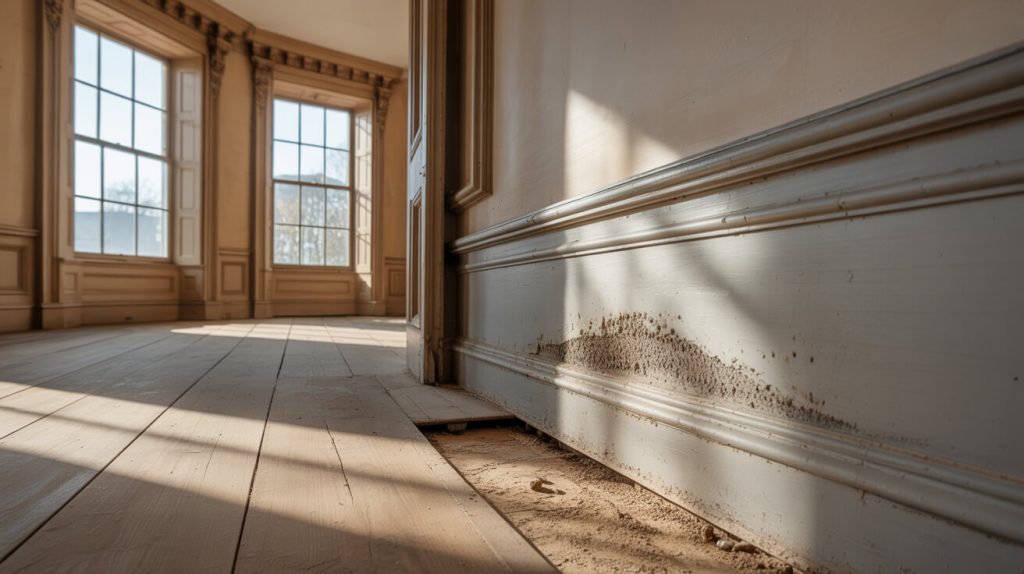
Damp Proof Courses: Setting New Standards for Moisture Control
A damp proof course (DPC) is the unseen edge between resilient buildings and gradual decay. Your property’s lifespan, compliance status, and asset value all hinge on whether moisture is kept in check from ground up. Unlike superficial fixes, a real DPC is less about appearance and more about the math — capillarity, permeance, and regulatory fit. As a property professional or asset manager, small technical oversights can cost your organisation in hidden inspections, spiralling repairs, and lost confidence during audits. The standard you set for damp protection will echo every time your surveyor walks a wall with a metre in hand.
Why DPCs Exist and What Sets Them Apart
- Definition: A DPC is a continuous physical barrier, most often integrated into masonry at the construction stage or as a retrofit, engineered to stop moisture rising by capillary action.
- Material Choices: Historically, slates and lead were the norm; modern standards (BS6576, PAS2035) trend toward high-density polyethylene or specialised chemical injections for performance and compliance.
- Scientific Principle: Capillary action is relentless; even porous stone or concrete will draw water vertically if left unchecked, carrying dissolved salts and causing internal and facade degradation.
- Regulatory Imperative: UK building codes specify DPC heights, compatible mortars, and necessary overlaps. Heritage and listed buildings often face additional planning hurdles, but exceptions are rare—and always closely scrutinised.
Any gap between expected DPC design and delivered installation puts your asset at legal and financial risk, regardless of building age or intended use.
Moisture is patient, but your surveyor’s report is final.
Mastering Modern DPC Performance: Precision, Materials, and Verification
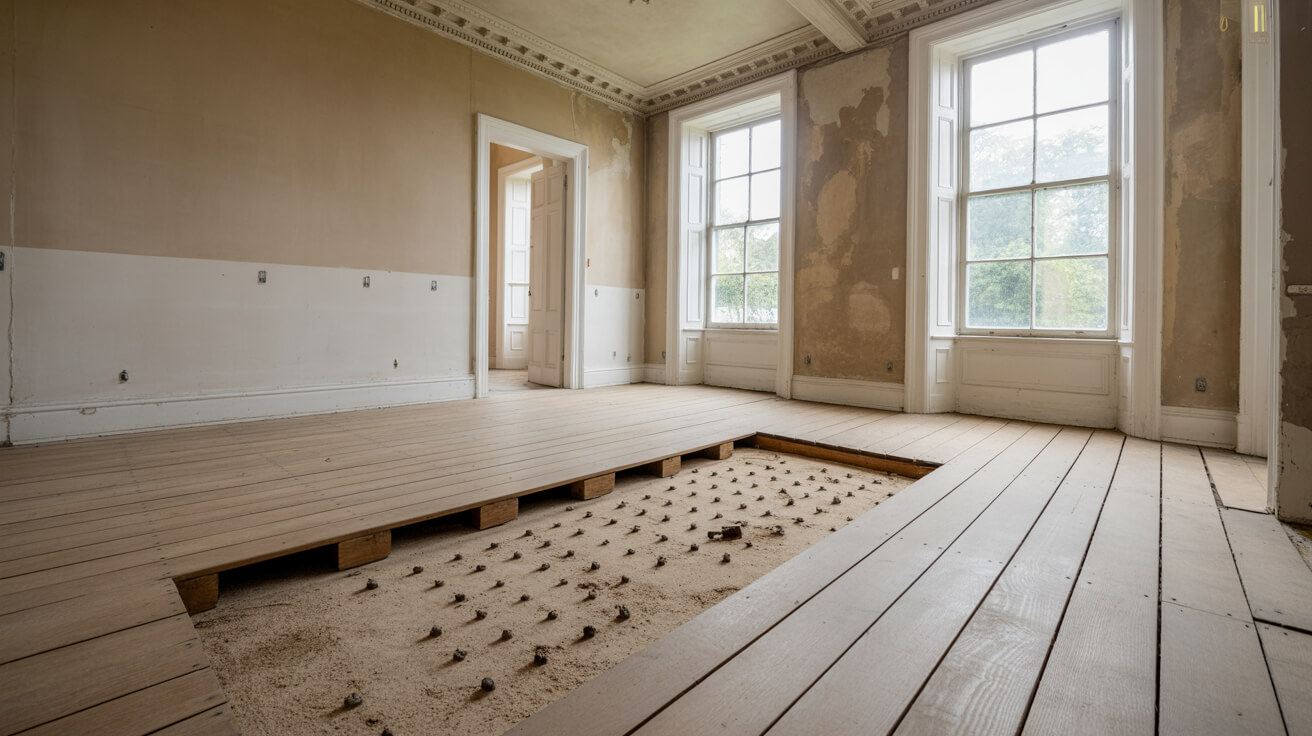
Today’s property risks call for more than tradition. Effective damp proof courses are now built on a tripod: robust materials, zero-tolerance installation, and post-completion verification. Only this combination safeguards your investment from the slow attrition that unchecked moisture brings.
Advancements in DPC Technology
- Materials Evolution: Polyethylene and resin-based sheets far exceed the flexibility and chemical stability of older slates or even engineering bricks. Where listed structures prohibit major changes, mineral-compatibility and reversibility become the defining benchmarks.
- Installation Standards: Gaps, overlays, or any bridging by screed, insulation, or render breaks continuity, inviting moisture to reclaim territory. Only strict sequencing and documented process, often photographed at each inspection stage, can guarantee full compliance.
- Diagnostics and Proof: Moisture metres, infrared thermography, and saline mapping confirm not just presence of damp after instal, but the root — confirming whether the DPC is doing its job or failing in silence.
Common Compliance Table
| Feature | Modern Poly DPC | Historic Slate | Bitumen or Cement | Injection | Allowed in Listed? |
|---|---|---|---|---|---|
| Flexibility | High | Medium | Very Low | High | Site Dependent |
| Service Life (yrs) | 25+ | 60+ | 15-25 | 10-30 | Regulated |
| Maintenance | Minimal | Medium | High | Medium | As Above |
| Retrofit Readiness | Easy | Impossible | Sometimes | Generally | Sensitive |
Investing in the right method pays for itself at every survey and resale. Precision in both material selection and installation is how you future-proof your reputation and your portfolio.
DPCs: The Bedrock of Structural Integrity and Compliance

Left unchecked, moisture is the adversary you can’t see but will eventually pay for. A failed DPC isn’t a local glitch – it sets off a chain reaction that ultimately erodes tenant safety, resale value, and insurance standing.
What You’re Actually Preventing
- Mould Expansion: Affecting not just plaster but every soft finish and air quality reading. For families and housing providers, this is more than cosmetic — it’s a compliance fault and a tenant-dissatisfaction accelerant.
- Salt Migration: Capillary action draws nitrates and chlorides. Their crystallisation blisters paint and lacerates ancient plasterwork, undermining even otherwise solid structures.
- Timber Damage: Slow damp brings woodworm, rot, and external fabric breakdown.
Financial and Compliance Summary
| Risk or Proof Layer | What Your DPC Mitigates | Resulting Asset Benefit | Regulatory Stake |
|---|---|---|---|
| HHSRS Legal Actions | Health and tenant claims | Reduced litigation | Mandatory |
| Failed Mortgage Survey | Lost sales and prolonged voids | Maintained deal integrity | Standard |
| Ongoing Repairs | Recurring cost and reputation exposure | Reduced OPEX, tenant turnover | Compliance |
It’s not what you see, but what you never have to fix, that marks robust damp proofing.
Installing for Longevity: Placement, Timing, and Specialist Coordination
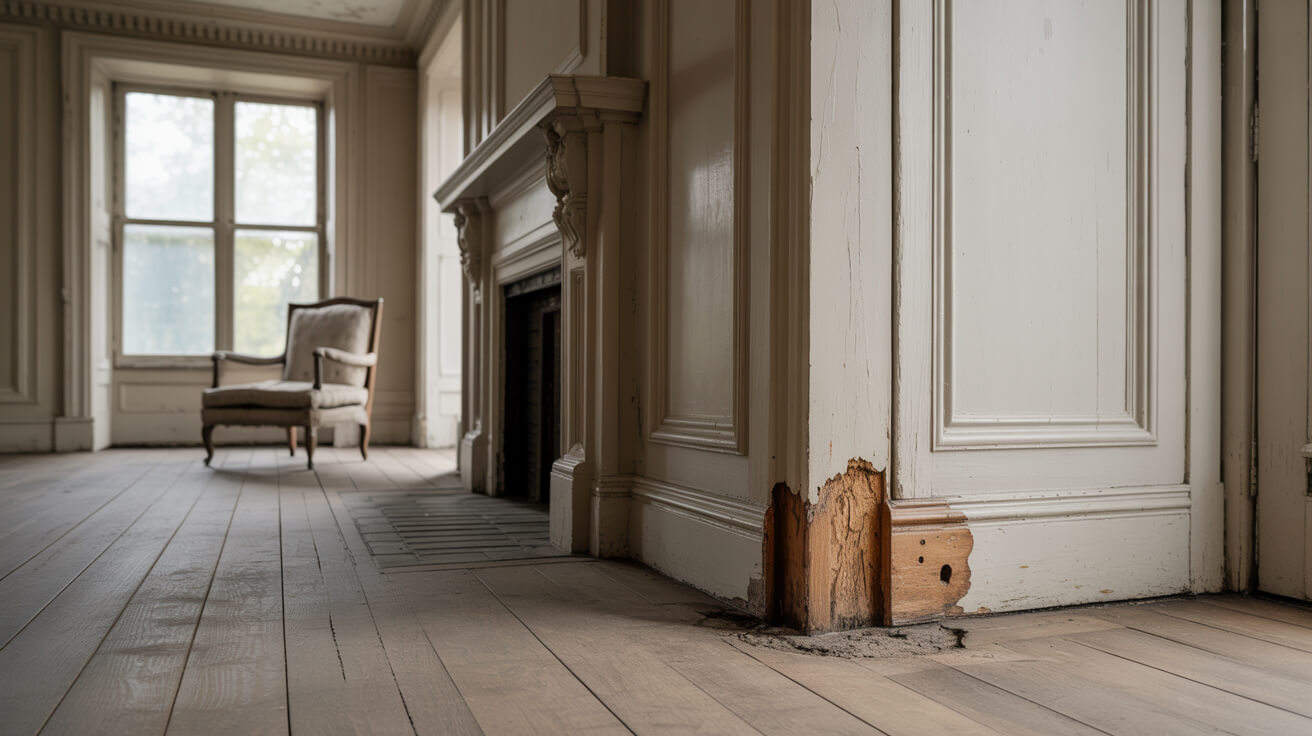
The optimal DPC installation is less a product, more a coordinated orchestration between trades, schedules, and future regulatory checks. When DPC installation is treated as a “tick-box” or left to uncoordinated fitting, dwellings and commercial sites pay for every shortcut in downstream costs.
Placement by the Book
- Height: Externally at least 150mm above ground, bridging all wall returns; internally continuous with floor membranes.
- Special Cases: In listed buildings, placements may need to follow historic detailing or be proposed through conservation officers for consent.
- Trade Collaboration: The DPC cannot function alone; overlaps must be integrated with radon barriers, insulation layers, and drainage. Isolated instals invite hidden failure.
Timing: When Is It Too Soon, Too Late?
- New Construction: Built into the wall at construction before floor screed and associated finishes.
- Refurbishment: For failed DPCs or planned upgrades, sequencing is critical. Surface removal, substrate drying, salt neutralisation, and complete re-covering must all align.
Insitu Building Preservation & Damp Proofing Specialists : The Coordination Edge
Properties managed by Insitu Building Preservation & Damp Proofing Specialists benefit from a job log that benchmarks every instal step against BS6576, giving your compliance officer and asset manager a documented advantage come revaluation or inspection.
Identifying the Fault Lines: Typical DPC Failures and Modern Prevention

Technical failure in damp proof courses often masquerades as “mystery damp.” The truth is, every bypass or omitted check sets up the next repair call. Prevention is the product of specification, site control, and repetitive verification.
What Breaks First?
- Bridging: Finishes or backfilled ground give moisture an alternate path.
- Overlaps: Incomplete returns, corner laps, or window reveals are common weak points.
- Material Ageing: UV, frost, or incompatible mortars degrade the membrane.
- Non-Compatible Interventions: Cement or bituminous coatings sometimes trap water inside instead of keeping it out.
Early Detection: Diagnostics for Longevity
- Regular use of moisture metres, especially on annual cycles for portfolios with compliance requirements.
- Scheduled thermal and salt-mapping evaluation, especially after any alteration or alleged water ingress.
Properties with monitoring and consistent aftercare plans build up both asset value and stakeholder trust; competitive pressure from lenders and regulators is driving these standards across all segments.
Legacy vs. Modern DPC: Understanding the Technology Shift

“Why not just reinstate what worked for a century?” Owners of listed and period properties often face trade-offs no general contractor will warn them about. Modern DPC technologies deliver legal and performance benefits that legacy solutions, while robust in their time, simply cannot offer against today’s compliance and moisture profiles.
What Differs in Modernisation?
- Testing: Modern DPCs can be quality-assured before and after instal; historic slate or brick can only be assumed (and usually fails post-alteration).
- Integration: Modern systems link wall, slab, perimeter, and joinery, eliminating isolated “fixes” that degrade over time.
- Retrofit Sensitivity: Poly DPCs or compatible chemical injections minimise disruption and maximise reversibility in protected assets.
- Maintenance: Scheduled monitoring with advanced diagnostics is unique to these systems — historic builds, absent this, risk undetected failures.
Comparative Table
| Feature | Modern DPC | Traditional Slate/Lead |
|---|---|---|
| Predictable Service Life | 25+ years | Variable, site-dependent |
| Verification | Yes (diagnostic tools) | Visual/Assumed |
| Listed Building Use | Conditional, expert-led | As existing or with planning officer oversight |
| Insurability | Favours compliant, documented instals | Often exclusions or conditions apply |
Updating without knowledge of the underlying science is risky; so is retrofitting disconnected from standards.
Diagnostics & Compliance: Elevating Performance from Guesswork to Guarantee

The era of hidden damp and subjective guesswork is closing. Modern property management expects every remediation or upgrade to come with traceable proof, not speculation. Regulations, surveys, and insurance reviews all focus now on what you can prove—before the problem shows.
Tools That Add Confidence
- Moisture metres: Provide quantifiable readings, not impressions.
- Thermal imaging: Uncovers not just cold spots, but moisture migration invisible to the naked eye.
- Salt and chemical tests: Identify lingering defects or confirm real drying after intervention.
Regulatory Backbone: BS6576 & PAS2035
More than a bureaucratic hoop, these standards require methodical site assessment, clear documentation, and continuous improvement. They were written to standardise what works and weed out the patchwork fixes that dominated property upgrades for decades.
When you work with Insitu Building Preservation & damp proofing specialists , every intervention comes with its diagnostic log—giving your compliance or portfolio manager a robust audit trail and early-mover advantage each cycle.
The only thing riskier than failing a compliance check is finding out through a complaint, not a plan.
Book Your Free Consultation With Insitu Building Preservation & Damp Proofing Specialists Today
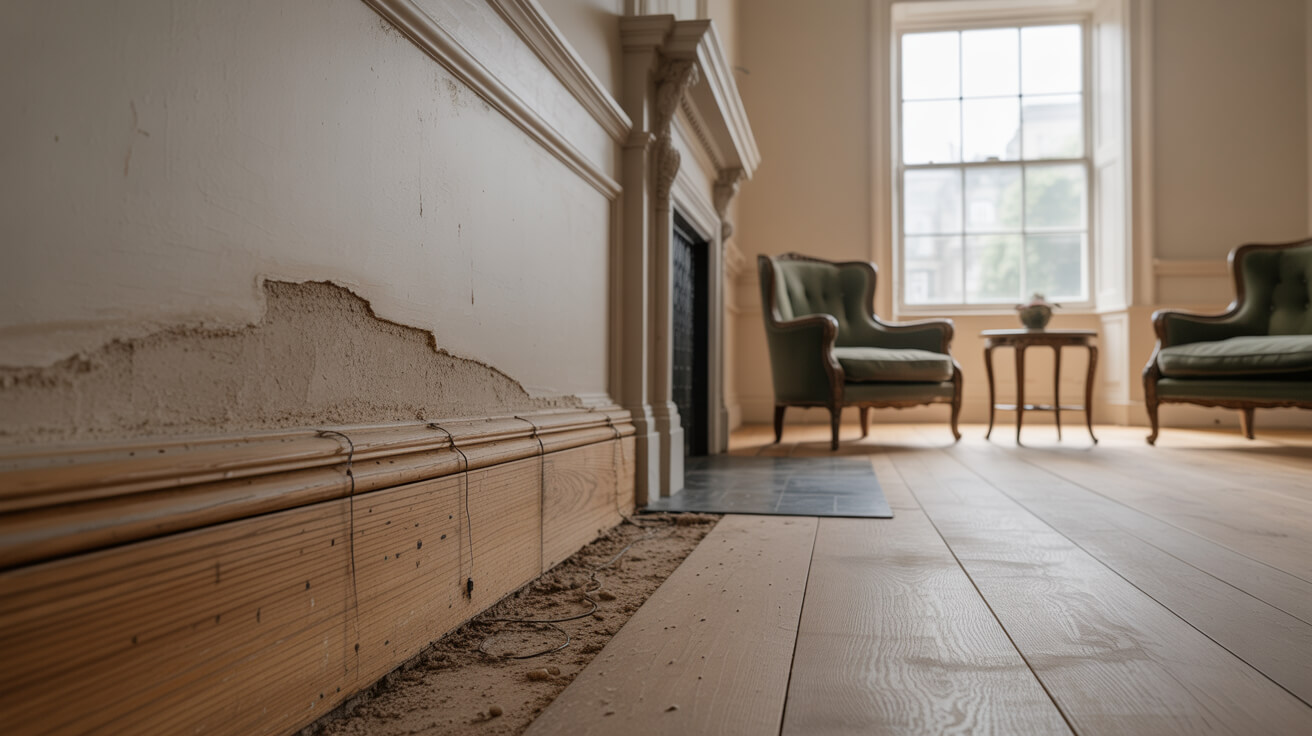
The properties that maintain their value, regulatory good standing, and tenant confidence are those managed with vigilance—not generic fixes. moisture control starts and ends with documented care, adaptive solutions, and tech-driven diagnostics.
What Lies on the Other Side of Precision?
- Operational Confidence: Audit-ready project logs for every intervention.
- Adaptive Safeguard: Solutions specified to your heritage details, your compliance requirements, and your ROI metrics—not a one-size-fits-all fix.
- Stakeholder Visibility: From letting agents to portfolio owners, transparency in intervention means stability, reduced voids, and fewer disputes.
If your targets are high—retaining asset status, securing reliable lending, cutting the constant stream of complaints or downgrades—a status-first, regulatory-savvy damp proofing partner will be your asset’s best shield.
Stake your claim to the right kind of project legacy and property reputation. The question becomes: does your property tell a storey of vigilance or repair?
[Schedule a property-specific review with Insitu building preservation & Damp Proofing Specialists —where compliance and confidence intersect.]
Frequently Asked Questions
What Is a Damp Proof Course and How Does It Work?
A damp proof course is the invisible but decisive line that divides buildings which quietly thrive from those that decay behind closed doors. It’s an engineered barrier—physically woven into your walls—that severs the upward flow of moisture from the ground, disrupting the capillary creep that’s more relentless than rain or flooding ever could be. This barrier, whether a slate band, a modern polyethylene sheet, or a contextually-judged breathable upgrade for heritage properties, stops water and the destructive salt-laden minerals it carries.
Scientific Principles
Groundwater climbs through brick and stone due to capillary action; even the best-built wall is a potential wick without a reliably installed damp proof course. Modern codes like BS6576 and PAS2035 demand more than the tokenistic presence of a barrier—they require demonstrable resistance to pressure and a lifetime of compatibility with the building’s original materials.
Materials and Methods
- Historic: Overlapping slate, lead strips, engineering bricks in lime mortar.
- Modern: Polyethylene membranes, injection creams, hybrid breathable solutions.
- Heritage: Site-adapted, reversible bands that respect breathability and reversibility mandates.
| Material | Heritage Use | Lifespan | Compatibility |
|---|---|---|---|
| Slate | Yes | 100+ years | High (pre-1920) |
| Lead | Sometimes | 80+ years | Risk of corrosion |
| Polyethylene membrane | No | 50+ years | Excellent (modern) |
| Silicone injection | Rarely | 20–30 years | Risk in old walls |
Why It Matters:
If your property is listed or of historic value—guesswork or standard DPC upgrades can do more damage than good. Only a system calibrated to the building’s substrate, moisture profile, and future use will both keep your asset dry and pass scrutiny from conservation officers or surveyors.
You’re not just blocking water; you’re preserving history, health, and hard-won capital. Choosing expertise is no longer optional—your building’s legacy is on the line.
How Do Damp Proof Courses Function Effectively in Modern Construction?
In modern heritage renovations, putting a damp proof course in the wall is the easy part. Ensuring that it keeps working—through decades of subtle shifts in temperature, use, and even minor renovations—is the acid test of both product and professional. The most durable damp proofing is invisible because it keeps problems from ever surfacing.
Operational Mechanics
A DPC’s true role emerges only when rigour blends with precision: the membrane or band must run continuous, undisturbed, and unbridged. Every transition—window reveal, party wall, or retrofitted extension—resents a risk of breach. Fail to account for these, and the wall becomes a moisture expressway. In heritage structures, the challenge amplifies: moisture must be redirected with respect to original fabric, ensuring old lime plasters still breathe, while modern intervention doesn’t create a pressure trap.
Diagnostic Backing:
Thermal imaging, moisture metres, and salt analysis aren’t optional add-ons—they are your assurance that the cure won’t be worse than the cause. Regular assessment is especially crucial in buildings where period property meets phase retrofitting; only data—and not wishful thinking—confirms performance.
Best Practices
- Integration: Align new DPCs with original construction lines, never just where it’s easy.
- Verification: Test with calibrated metres before, during, and after works.
- Regulatory Alignment: Never compromise on BS6576-compliant documentation.
Professional Tip:
Heritage projects benefit from aftercare plans—schedule follow-up moisture checks at 3, 12, and 24 months. A good DPC gives you peace of mind so subtle, you’ll only notice by the absence of future headaches.
Why Are Damp Proof Courses Essential for Protecting Property Integrity?
Building trust in your property means closing the door on invisible threats before they shape the reputation of your portfolio or legacy. For every landlord who’s lost a letting due to black mould, for every homeowner whose renovation estimate doubled because damp was ignored, for every heritage trustee who’s seen PR turn sour over avoidable compliance issues—it always comes back to the same origin: poor or missing damp proofing.
Asset and Regulatory Protection
Without an effective DPC, minor patchwork repairs become a permanent budget line. Even in listed buildings where intervention is tightly governed, the absence of an up-to-date moisture barrier means endless battles with internal degradation, mounting paperwork, and inevitable reduction in asset value.
Economic Consequence:
Properties with chronic damp see an average devaluation of between 10% and 25% at survey, and this impact stacks with higher insurance premiums, lost occupancy, and repeated repair invoices—none of which are easy to explain to your stakeholders or your future heirs.
| Regulatory Failure | Resulting Cost | Loss of Asset Confidence |
|---|---|---|
| Failed mortgage | Lost sale, costly delay | Investor withdrawal |
| HHSRS citation | Mandatory upgrades, tenant litigation | Reputational decline |
| Persistent repair | Compound OPEX, portfolio drag | Compliance black mark |
Why Compliance Matters:
Institutions now demand traceable repair logs—insurers won’t underwrite chronic damp, mortgage lenders spike deals, and local authorities can issue improvement mandates. Good enough isn’t enough; only an expertly specified, installed, and tested DPC offers an ongoing exemption from major asset risk.
True protection isn’t invisible—it’s the absence of reoccurring threats. If you want certainty, trust those who make compliance a habit, not an event.
Where and When Should Damp Proof Courses Be Installed for Maximum Benefit?
For heritage or listed properties, timing and placement are everything. Retrofitting must balance minimal disruption to original fabric with maximum coverage against future incursion.
Placement Nuance
- Above external ground: Not less than 150mm, ensuring splashing and flooding don’t overwhelm the barrier.
- Continuous with floors: The weakest link is always the join—hidden cavities or patchy overlaps defeat the system.
- Proximity to external features: Drains and external hard landscaping often change ground moisture behaviour. Site the DPC with drainage flow in mind.
Timing and Sequencing
- During renovations: DPCs come before any finishes—don’t let trades skip steps for their own deadlines.
- Routine check during upgrades: Old properties with periodic work should use this as an audit chance.
- Post-diagnosis, not default: Don’t just add a DPC because policy dictates; ensure there’s a valid need confirmed by expert survey.
| Decision Fork | Proactive Approach | Result If Missed |
|---|---|---|
| Scheduled review | Hidden risk found and stopped | Escalated maintenance |
| Pre-sale audit | Smooth transaction | Costly renegotiation |
| Heritage retrofit | Regulatory sign-off and reversibility | Conservation pushback |
Strategic Advantage:
Owners who treat damp proofing as an identity marker—“we fix silently and early”—build a rep that preempts both maintenance creep and council quibbling. This is the point where choosing Insitu Building Preservation & Damp Proofing Specialists places you in the league of those who don’t just comply, but set the benchmark for others to follow.
What Are the Common Failure Modes and Challenges in Damp Proof Course Installations?
The bulk of repair costs and compliance shocks flow from small missteps made at installation, not from acute weather or ageing. Problems rarely announce themselves—the warning is found in the slow escalation of musty odours, paint defects, or surveyor ‘further investigation’ notes.
Leading Failure Patterns
- Render or plaster bridging: across the DPC, especially during “cosmetic” upgrades.
- Discontinuity at hidden junctions: A missed corner in a cellar or conversion space will be the spot a damp patch first blooms.
- Incorrect materials: used for the original wall type: Cement in soft brick, or incompatible silicone in century-old lime.
- Failure to test and log moisture: Unchecked, these sets up the slow, silent transfer of risk to the next owner, tenant or auditor.
Proof Layer:
Estimates show over 60% of sustained damp in British period homes is due fundamentally to either poor DPC method or gap-filled aftercare. This is rarely a product failure; it’s a chain-of-command breakdown.
Monitoring and Solution
Scheduling regular moisture audits, especially after major trades have left, ensures your building resists problems before they metastasize. Professional installers will deliver post-works logs—a level of confidence that’s fast becoming the expected norm in every tender and sale pack.
No need to gamble with asset value. Benchmark brands like Insitu Building Preservation & Damp Proofing Specialists build lifetime protection and traceable accountability into every job, so “invisible” never means “unreliable.”
How Do Traditional Methods Compare with Modern Damp Proofing Solutions?
It’s tempting to trust a past that still echoes through your property’s oldest walls. Slate and lead did their job for generations—but as usage and weather have shifted, their limits have become clear. Modern upgrades, when properly installed, provide performance and audit trail that legacy methods can’t match.
Comparison Table
| Feature | Traditional (Slate/Lead) | Modern (Poly Membrane/Chemical) |
|---|---|---|
| Lifespan | Can exceed 80 years | 30–50 years (measurable, repeatable) |
| Auditability | Dependent on history | Full tracing/logging |
| Compatibility | High for heritage | High for refurbs, variable in listed |
| Regulatory Status | Exempt, but under scrutiny | Mandatory in new/major refits |
| Upgradability | Low | Easy or reversible |
What’s Actually Improved
- Moisture resistance and testability: Modern DPCs are routinely verified with digital tests.
- Compliance and insurability: Contemporary solutions produce a documented, easily transferable proof structure ready for scrutiny.
- Flexibility for reversibility: Some modern methods allow for non-invasive, conservation-friendly temporary protection—perfect for listed buildings that may require future revision.
Modern doesn’t mean aggressive. The best providers are those who blend the patience and judgement of craftspeople with the certainty demanded by today’s building standards. Insitu Building Preservation & Damp Proofing Specialists are designed to follow that thread: advanced techniques with conservationists’ discipline.
When you invest in innovation that aligns with heritage values, you produce more than a code-compliant wall—you enact stewardship that endures occupancy cycles and regulatory resets alike.
How Can Diagnostic Tools and Compliance Standards Optimise Damp Proofing Performance?
In property stewardship, what’s measured can be managed—and what’s documented earns trust where it matters (with insurers, mortgage firms, and future buyers). Diagnostic tools and regulatory compliance standards now define the line between resilient properties and those left defenceless against incremental decay.
Best Practices for Verification
- Moisture metres: and thermal imaging provide hard evidence that can’t be bluffed or overlooked.
- Salt and pH analysis: highlight hidden intrusions that the eye can’t detect, but a future auditor certainly will.
- Continuous monitoring: —using data logging in high-value or portfolio properties—turns asset care from reactive to quietly preventive.
Regulatory compliance—most critically with BS6576 and PAS2035—is no longer “for the file.” It is the mechanism by which your DPC work not only passes muster but remains defensible in any future dispute, survey, or insurance claim.
Synergy Table
| Tool/Metric | Proof Offered | Stakeholder Satisfied |
|---|---|---|
| Moisture metre log | Objective performance | Surveyor, buyer |
| Post-instal analytics | Transferable documentation | Auditor, insurer |
| Reg. certification (BS6576, PAS2035) | Audit pass, future resale | All |
The best companies have made proof a baseline, not a premium. Those who trust only what can be shown win reputation, security, and peace of mind—qualities that quietly increase property value every time.
Insitu Building Preservation & Damp Proofing Specialists are proud to operate to this level—your bar for proof, stability, and operational peace of mind.
Frequently Asked Questions
What Is a Damp Proof Course and How Does It Actually Protect Heritage Properties?
A damp proof course (DPC) is the invisible firewall preventing unseen ground moisture from corroding your walls, finishes, and asset value. In heritage and listed buildings, it’s your first and last line of defence against the slow rot that wipes out both investment and historic significance.
The Physics Behind the Barrier
Moisture isn’t polite—it follows the path of least resistance. Capillary action drags water, and the destructive salts it carries, up through porous brick, stone, or mortar, rising behind ornate skirtings, panelling, or lime plaster until damage finally surfaces. The DPC acts as a break in this capillary chain—legacy properties might use overlapping slates or even lead, while modern retrofits favour highly engineered polyethylene membranes or breathable injection systems. Each material must match both the substrate and conservation restrictions.
Why It Matters for Heritage
For listed or conservation-area structures, damp proofing is about operational subtlety, not just brute compliance. Every intervention should prioritise reversibility, minimal visual impact, and a forensic understanding of how original materials behave. Incorrect material choices or generic tanking often suffocate the walls, trapping more moisture in than they keep out.
Moisture doesn’t recognise policy—it punishes poor preparation. Don’t gamble your legacy.
Standards and Best Practice
Your DPC installation should align with BS6576 and (where applicable) BS7913 and PAS2035 for retrofit and heritage guidance. Proper sequencing—ensuring DPC continuity in wall-floor junctions, avoiding short cuts in complex masonry, and providing breathing space for traditional limework—protects authenticity and compliance.
When you address moisture at its advance, you set the stage for every future decision—preserved beauty, sustained value, and one less silent enemy undermining your asset.
How Do Damp Proof Courses Work Effectively in Modern and Historic Contexts?
The secret to stopping moisture isn’t just installing a barrier—it’s precision, context, and rigorous validation every step of the way. In recent builds, the playbook is clear-cut: integrate a certified, impervious membrane at least 150mm above ground, tie into floor slabs, and check every lap and junction. But listed properties require adaptation—not compromise.
Adaptation Over Assumption
Older walls almost always present surprises: voids from lost joists, variable brick bonds, past bodged repairs. For these, your solution is never template-driven. Techniques like moisture mapping, thermal scans, or salt tests reveal concealed ingress points, guiding a tailored response—be it gentle cream injection for discrete DPC supplementation, or capillary breaks that dovetail with lime plastering regimes.
Why Verification Trumps Theory
It’s easy to assume success when you don’t regularly monitor. Moisture doesn’t care about assumptions—if a DPC is bridged by high external ground or heavy interior render, failure becomes inevitable. High-specification diagnostic tools (precision Hygrometers, thermal imaging, sodium chloride analysis) give tangible assurance and, crucially, ongoing evidence for conservation officers or future buyers.
Role of Best Practices and Standards
Modern damp proofing in any property, but especially those with heritage constraints, should never be rushed. Phased implementation, careful substrate checks, and regulatory documentation (PAS2035, BS6576 logs) are the signal of diligence and credibility.
Experience in listed buildings is more than a badge—it’s an operational commitment. Insitu Building Preservation & Damp Proofing Specialists operate in the margin between visual preservation and future-proof integrity, guaranteeing that what you save is more than surface-deep.
Why Are Damp Proof Courses Essential for Long-Term Value and Compliance in Heritage Properties?
Without a reliable system to block ground moisture, every decorative finish, load-bearing wall, and timber detail is running on borrowed time. Damp may announce itself quietly—faint must, soft patches, isolated paint blisters—but the real threat is cumulative: rot, infestation, collapse, and a relentless downgrading of value and habitability.
The Stakes Behind the Scenes
Every survey flagged for “damp to lower walls” is a potential deal-breaker, demolishing sales chains, nullifying insurance, or triggering long-winded legal disputes. For landlords, a failed HHSRS inspection (Housing Health and Safety Rating System) can turn strategic assets into liabilities, with disrepair claims, enforcement, and reputational bleed.
| Problem | Long-Term Impact | Indirect Cost |
|---|---|---|
| Hidden capillary damp | Plaster failure, health complaints | Tenant churn, HHSRS risk |
| Inadequate DPC | Structural decay, resale fails | Legal fees, void periods |
| Non-compliance | Regulatory fines, denied insurance | Forfeited claims, stigma |
How Proactivity Changes the Game
Addressing damp isn’t just about compliance; it’s about making smart, asset-level moves that anticipate threats rather than waiting for visible damage. A certified DPC, checked and documented, delivers more than peace of mind: it holds together your balance sheet.
Leadership by Prevention
Stake your reputation on your preparedness. The owners who move from “good enough” to precise deployment are remembered as more than caretakers—they’re seen by their peers as preservation strategists and trusted asset managers.
Where and When Should Damp Proof Courses Be Installed to Maximise Performance in Heritage Settings?
Correct timing and placement aren’t niceties—they are your risk control. Installing a DPC just anywhere, or at the wrong stage, guarantees a host of follow-on issues, from unseen moisture tracking around voids to failed floors and decorative breakdown.
Decision Points for Intervention
- New build or major renovation: Integrate DPCs at or above 150mm above ground, matching historic ground levels and designed for both visible and concealed wall elements.
- Retrofit or repair: Prioritise DPC intervention during plaster, flooring, or external repair cycles, when you have maximal access to substrates and can integrate monitoring or drainage upgrades.
- Heritage upgrade: Never instal without guidance from a listed building consent officer; supply diagnostic data and product sheets to make your case.
The Hidden Deadline
Most failures stem from deferred action—teams waiting for visual symptoms, or adapting off-the-shelf products to non-standard walls. Planned installations, combined with humidity and salt checks, seize control of risk at the stage you can still influence.
You measure preparedness by the problems you preempt, not the ones you fix.
Scheduling DPC upgrades is less about the calendar and more about aligning with lifecycle moments in your property’s evolution. Insitu Building Preservation & Damp Proofing Specialists bring you a timing and sequencing regime built from decades of watched and unwatched risk.
What Are the Common Failure Modes and Pitfalls of Damp Proof Courses in Heritage Projects?
It’s not just improper installation that undoes protection—complex, historic structures magnify every oversight. The usual suspects? Bridging (where plaster or render covers or short-circuits the DPC), incompatible materials (cement, thick gypsum over lime), incomplete wall-fabric mapping, or simple neglect of annual aftercare.
Identifying and Rectifying Risk
No property manager expects to find rot behind wall panelling, but heritage buildings hide inherited mistakes—unknown slates out of alignment; membrane terminates short of a partition; past trades mixing modern and traditional mortars. The test isn’t what’s visible at handover, but how many seasons the system quietly endures.
- Scheduled checks with moisture metres.
- Salt analysis to confirm legacy or active pathways.
- Cross-verification with floor membranes and sub-base.
| Issue | Source of Failure | Prevention |
|---|---|---|
| Render bridging | Overlapping coatings | Visual checks, finish gap, training trades |
| Substrate mismatch | Cement on lime, missed zones | Pre-instal lab analysis, local adaptation |
| Omitted aftercare | Lack of planned checks | Diary reminders, reporting to conservation officer |
Turning Vulnerability Into Strength
Losses compound in silence. A heritage DPC plan is less about a single fix, more about orchestrating checks, training, and upgrades over time. The real value of working with professionals who understand heritage is not just their craftsmanship—but their system-level memory.
How Do Traditional and Modern Damp Proofing Solutions Compare in Heritage Environments?
Heritage and listed buildings weren’t built for contemporary materials. Traditional damp proof courses—overlapping slate, dense bricks, even lead—offered longevity in lower-risk climates with expected maintenance. Yet now, changing weather, urban density, and shifting water tables mean old methods often reach their limits sooner.
Why Modern Solutions Matter
Modern, heritage-compatible DPCs add testability and adaptability to the equation. Polymers and low-volume injection resins, when used judiciously, let you blend performance with conservation rules. This flexibility satisfies both your conservation officer and your asset’s long-term financial logic.
- Traditional strengths: Fit with original fabric, no visual impact, proven when maintained.
- Modern strengths: Precision monitoring, higher resistance to salts, easier certification, upgrade cycle mapped to financial and regulatory expectations.
Bringing Precision to the Old World
No two properties carry identical risk. The leaders in heritage asset care aren’t just those who keep up—it’s those who build a trail of attestation: documented interventions, regular reviews, compliance logs. Insitu Building Preservation & Damp Proofing Specialists have earned their place as reputation insurance for anyone whose name is listed next to a listed building’s deeds.
Reputation is built in the seasons you avoid crisis—not just those you answer it.
