

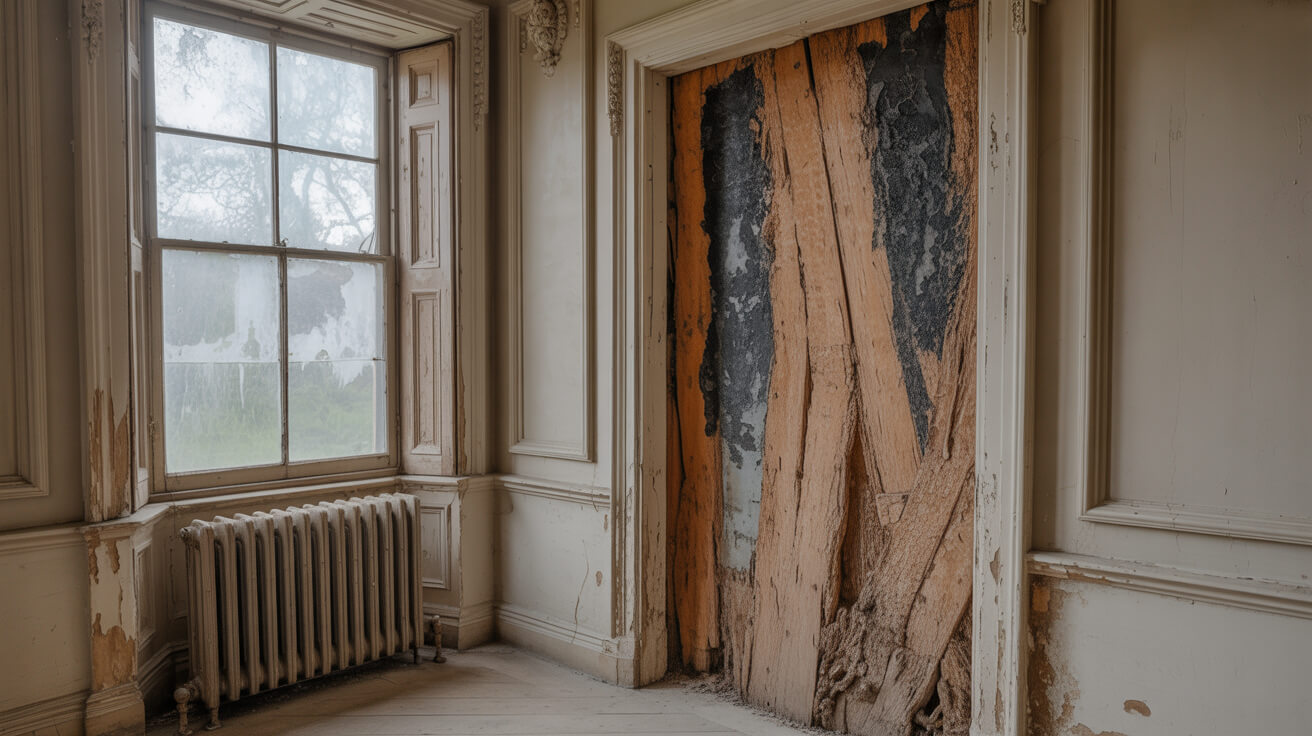
The Act is central to ensuring that consumers engaging with industries such as damp proofing—particularly in heritage properties and listed buildings—receive remediation for deficiencies in service delivery. It formalises the expectations and obligations of both service providers and consumers, ensuring that treatments adhere to established technical and conservation benchmarks.
The Consumer Rights Act 2015 consolidates a variety of previous consumer protection measures into a single comprehensive piece of legislation. It mandates that goods and services must be of satisfactory quality, fit for purpose, and as described by the seller. For specialised sectors such as damp proofing in heritage properties and listed buildings, the Act underpins measures for ensuring that technical performance aligns with consumer expectations and statutory standards.
In the context of property maintenance, the Act plays a critical role in addressing issues related to damp, where improper treatments can lead to significant deterioration of the building’s fabric and potential legal disputes. The Act provides both the choice to seek remedies such as repairs or refunds and a framework for legal redress, thereby protecting consumers from substandard workmanship and material deficiencies.
Overview / Context
The Consumer Rights Act 2015 emerged from the need to modernise and simplify consumer legislation in the United Kingdom. It replaces a patchwork of earlier laws with a single, coherent statute that applies uniformly across all sectors, including property maintenance. When applied to the damp proofing sector for heritage properties and listed buildings, it not only reinforces technical standards but also addresses the unique challenges posed by the conservation of historic structures.
Heritage properties and listed buildings have distinct requirements due to their age, construction methods, and conservation status. The remedies and guarantees embedded in the Act serve to protect consumers by ensuring that any damp proofing treatments meet rigorous quality standards, thereby preventing future deterioration. Compliance with industry norms, such as those outlined in BS6576, BS8102, and PAS2035, becomes legally enforceable under this framework, securing the long-term integrity of historically significant properties.
Additionally, this legal framework interacts with local conservation guidelines and building regulations. It creates a multi-layered system where statutory consumer rights are integrated with technical repair standards and heritage conservation rules, ensuring that interventions not only rectify damp issues but also preserve the building’s historic value.
History
Legislative Origins and Developments
The evolution of consumer protection law in the United Kingdom has been marked by a gradual consolidation of previously disparate legal instruments. Early consumer protection measures largely focused on basic trade fairness and quality assurance. Throughout the latter part of the 20th century, a growing recognition of consumers’ vulnerability in increasingly complex markets led to more robust legal interventions.
The Consumer Rights Act 2015 represents the culmination of these efforts. It was introduced to create a more streamlined and accessible legal framework that would cover a broad range of consumer transactions. Its passage was driven by the need to address inconsistencies in the application of earlier laws and to enhance consumer confidence across sectors.
Development of Damp Proofing Standards
Parallel to the evolution of consumer protection legislation, the building maintenance industry developed specific standards for addressing common issues such as damp. Standards such as BS6576 and BS8102 were developed in response to the practitioner’s need for diagnostic and treatment protocols that could reliably address the multifaceted nature of damp. These standards focused on ensuring that both the diagnosis and remediation of damp issues were carried out in a systematic, standardised manner.
With the adoption of the Consumer Rights Act 2015, the principles enshrined in these technical standards were given a legal dimension. The integration of robust damp proofing methodologies with consumer rights guarantees helped to align technical efficacy with legal accountability.
Contemporary Reforms and Industry Implications
Contemporary legal reforms have continued to refine the interplay between consumer rights and technical standards. In the damp proofing sector, especially for heritage and listed properties, the Act now guides industry practice and investment decisions. Updated methodologies, driven by both technological advancements and evolving statutory interpretations, ensure that interventions remain effective while respecting the historical and architectural significance of the property.
This convergence of law, technology, and heritage conservation has elevated the damp proofing sector to a model of multidisciplinary integration. The effect has been an enhanced level of accountability and improved consumer redress capabilities, ultimately leading to higher standards of service.
Concept / Description
Definition and Core Provisions
The Consumer Rights Act 2015 is defined by its core mandate that all goods and services must satisfy consumers by being of appropriate quality, fit for their intended purpose, and accurately described. Its main provisions include:
- Implied Terms: Contracts for services inherently contain terms ensuring compliance with statutory quality benchmarks.
- Remedies: Consumers are provided with clear legal avenues for recourse if they do not receive services that meet these benchmarks, including options for repair, replacement, or refund.
- Enforcement: The legislation enables judicial enforcement, thereby providing consumers with a formal mechanism to claim redress in cases of non-compliance.
In the context of damp proofing, these provisions are applied to ensure that the technical performance and quality of repair services adhere to rigorous standards. These standards, such as those in BS6576, BS8102, and PAS2035, are instrumental in mitigating the risk of recurrent damp issues and ensuring ongoing property integrity.
Structural Components and Operational Mechanisms
The structure of the Act is organised to integrate legal obligations with practical enforcement. Key components include:
- Consumer Guarantees: These ensure that all damp proofing services are provided in a manner that prevents future property deterioration.
- Quality Remedies: In the event of non-compliance, remedial actions are provided that can include reparative measures or financial compensation.
- Judicial Oversight: Legal frameworks under the Act allow consumers to enforce their rights via the courts, providing a layer of accountability that influences industry practices.
In operational terms, the Act incentivizes service providers to comply with established industry standards. For heritage properties, where conservation issues are paramount, adherence to these standards is critical not only for statutory compliance but also for preserving the building’s historical character.
Functionality / Purpose / Applications
Practical Implementation
The Consumer Rights Act 2015 is fundamentally designed to protect consumers by ensuring that contractually agreed services are delivered to a high level of quality. In practical use:
- Quality Assurance: The Act serves as a guarantee that any damp proofing treatment will be executed in accordance with statutory and industry standards. When treatments fall short, the consumer is entitled to a range of legally enforceable remedies.
- Corrective Mechanisms: It provides a structured framework for addressing service failures. This includes provisions for remedial work, replacement of inadequate services, and financial reimbursement.
- Redress Pathways: Through judicial and administrative mechanisms, consumers have access to formal dispute resolution channels that can enforce the terms of the service agreement.
These functionalities are particularly important in the context of heritage properties and listed buildings. Here, the precision of treatment methods must be balanced with strict regulatory compliance regarding building conservation. The Act ensures that any service provided under these conditions meets both legal and technical requirements.
Alignment with Technical Standards
The legal requirements of the Act are closely aligned with technical standards that govern damp proofing. For instance:
- BS6576 / BS8102 Standards: These provide the technical criteria for diagnosing and treating damp, ensuring that service providers apply methods that are both effective and verifiable.
- PAS2035 Compliance: This standard specifically addresses the risk management aspects of retrofitting heritage buildings, guiding the process to preserve historical integrity while mitigating moisture problems.
When these standards are enforced through the lens of the Consumer Rights Act 2015, they help create a market environment where consumers have strong assurances regarding the quality and longevity of damp proofing services. This dual layer of protection facilitates better decision-making for property owners and contributes to improved long-term outcomes.
Domain-Specific Applications
The application of the Act in the damp proofing sector is multifaceted. In practice:
- Contractual Clauses: Service agreements for damp proofing work incorporate specific clauses derived from the Act, ensuring that quality and performance standards are enshrined in contract terms.
- Inspection and Certification: Regular inspections, supported by diagnostic tools such as moisture metres and thermal imaging, verify that treatment levels meet the necessary legal and technical benchmarks.
- Remedial Processes: In cases where treatments are unsatisfactory, consumers are provided with a clear path to enforce remedies—ranging from re-inspection to full financial recompense—thereby minimising further deterioration and financial losses.
This comprehensive approach not only benefits consumers but also sets a robust standard for service providers within the industry.
Classifications / Types / Variants
The application of the Consumer Rights Act 2015 in damp proofing can vary depending on the nature of the property and the specific damp issues encountered. Classifications include:
- Standard Damp Proofing: Applied to conventional properties where treatments are executed according to baseline industry standards.
- Heritage-Adapted Treatments: Specialised damp proofing methods tailored to heritage properties, which require an integration of modern technology with traditional materials and conservation techniques.
- Listed Building Interventions: Complex treatments requiring additional layers of approval and compliance due to the stringent regulations governing listed buildings. These interventions typically necessitate bespoke treatment plans to balance legal and conservation demands.
Each classification reflects a variant in both the technical approach and the regulatory framework, tailored to address the distinct challenges encountered in different property types.
Systems / Tools / Methodologies
Ensuring compliance with the Consumer Rights Act 2015 in damp proofing involves a variety of systems, tools, and methodologies:
- Diagnostic Instruments: Tools such as moisture metres, thermal cameras, salt test kits, and Hygrometers provide crucial data about the extent and nature of damp problems.
- Inspection Protocols: Standardised procedures, including non-invasive substrate analysis and moisture gradient mapping, ensure consistent evaluation of treatment outcomes.
- Quality Assurance Systems: These systems embed routine compliance audits and performance metrics, aligning service delivery with industry standards like BS6576, BS8102, and PAS2035.
- Digital Monitoring Platforms: Emerging technologies allow continuous monitoring of damp conditions, enabling proactive maintenance and immediate corrective action if issues arise.
- Methodological Guidelines: Established protocols define the standard operating procedures for damp proofing treatments. This includes guidelines on material application, surface preparation, and post-treatment evaluation which are critical to maintaining structural integrity and heritage value.
These systems collectively ensure that all damp proofing interventions are executed to the highest possible standards while remaining compliant with both consumer law and technical regulations.
Stakeholders / Entities Involved
Various entities play key roles in the enforcement and effective application of consumer rights in the damp proofing sector:
- Property Owners and Managers: They are the primary beneficiaries of consumer protection, relying on the Act to secure quality workmanship and reliable service delivery.
- Damp Proofing Contractors: Service providers who must adhere to technical and legal standards. Their ability to demonstrate compliance is pivotal in mitigating risks associated with damp interventions.
- Surveyors and Inspections Experts: Accredited professionals who perform critical evaluations of damp proofing treatments and certify that work meets statutory quality benchmarks.
- Regulatory Authorities: Government bodies, local councils, and conservation agencies that enforce building regulations and heritage preservation guidelines. These entities ensure that interventions do not compromise the structural or historical integrity of properties.
- Legal Practitioners: Specialists in consumer law who often provide counsel and support in dispute resolution, ensuring that legal remedies are accessible when service deficiencies occur.
The interplay among these stakeholders creates a robust ecosystem for maintaining and enforcing consumer rights, particularly in sectors where technical precision and heritage conservation intersect.
Legal / Regulatory / Ethical Considerations
The application of the Consumer Rights Act 2015 in the damp proofing realm is reinforced by a complex matrix of legal, regulatory, and ethical considerations:
- Legislative Framework: The Act exists within a broader legal environment that includes additional regulations such as the Building Regulations Part C, the Homes (Fitness for Human Habitation) Act 2018, and sector-specific guidance for damp proofing.
- Industry Standards: Compliance with technical benchmarks such as BS6576, BS8102, and PAS2035 is mandatory. These standards serve as the concrete measure for both quality and workmanship, and they are legally enforceable as part of the consumer protection framework.
- Heritage Conservation: Listed buildings and heritage properties are subject to supplementary conservation requirements. Legal mandates such as listed building consent and heritage conservation guidelines ensure that any intervention preserves the historical aesthetic and structural integrity of the property.
- Ethical Considerations: An ethical balance is required to both protect consumer rights and preserve cultural heritage. This necessitates that service providers maintain transparency and accountability in their methods, thereby upholding both regulatory standards and ethical imperatives.
- Dispute Resolution: The Act provides a structured mechanism for resolving disputes. This is augmented by dispute resolution frameworks that facilitate remedial action if damp proofing work does not meet contractual or statutory requirements, ensuring that consumers have access to redress without undue delay.
Legal and regulatory compliance in this context is central not just to consumer protection, but also to the long-term preservation of heritage properties, which demand a high degree of care and specialised treatment methods.
Performance Metrics / Data / Measurements
Evaluating the effectiveness and compliance of damp proofing interventions under the Consumer Rights Act 2015 involves a range of quantitative and qualitative metrics:
- Inspection Scores and Measurements: Data collected from moisture metres, thermal imaging, and salt tests provide objective measurements of moisture levels and treatment efficacy.
- Compliance Audits: Systematic audits measure adherence to industry standards and legal regulations, often resulting in certification levels that attest to the quality of the treatment provided.
- Redress and Warranty Data: Metrics on the frequency and outcome of consumer redress claims or warranty activations serve as indicators of service durability and consumer satisfaction.
- Before-and-After Assessments: Comparative data highlighting improvements pre- and post-treatment are used to validate the success of the intervention.
- Consumer Feedback: Although largely qualitative, consumer feedback through surveys and complaint data can provide insights into service performance and areas needing improvement.
- Statistical Summaries: Tables and charts summarising key performance indicators help consolidate a diverse array of data, making it accessible for both regulatory and consumer review.
| Metric Category | Examples |
|---|---|
| Technical Measurements | Moisture metre readings, thermal gradients, salt test results |
| Compliance Indicators | Audit scores, certification levels, conformity percentages |
| Consumer Redress | Number and outcome of complaints, warranty claims data |
| Comparative Performance | Before-and-after treatment data, property valuation changes |
These performance metrics are critical in establishing accountability and ensuring that the service outcomes align with both legal and technical standards.
Challenges / Barriers / Limitations
The practical implementation of the Consumer Rights Act 2015 in the damp proofing sector is not without significant challenges. Several factors constrain its full effectiveness:
- Operational Complexity: The diagnosis and treatment of damp in heritage and listed buildings require specialised skills and tools that may not be uniformly available. Variations in construction, material ageing, and architectural subtleties complicate standard diagnostics.
- Economic Constraints: The cost associated with high-standard damp proofing treatments is frequently elevated in heritage settings. Consumers may face budgetary challenges that hinder the adoption of the most effective remediation methods.
- Regulatory Ambiguities: Although the legal framework is robust, the intersection of multiple regulatory regimes—consumer protection, building regulations, and heritage conservation—can lead to interpretive ambiguities. These overlaps sometimes result in delays or litigation when parties dispute service quality.
- Technological Limitations: The effectiveness of non-invasive diagnostic technologies, while improving, still faces limitations in detecting deeper moisture issues. This can lead to underestimation of the problem, affecting the reliability of treatment outcomes.
- Cultural and Social Dynamics: Heritage properties are not only technical challenges but also cultural artefacts. The need to preserve historical aesthetics may conflict with modern damp proofing practices, creating tension between contemporary efficiency and traditional conservation.
- Coordination Among Stakeholders: Achieving the standards set out by the Act requires close coordination among designers, contractors, surveyors, and regulatory bodies. This interdisciplinary collaboration can be difficult to manage consistently, sometimes leading to fragmented enforcement of consumer rights.
Impact / Influence / Legacy
The Consumer Rights Act 2015 has had a profound influence on both consumer behaviour and industry practices across multiple sectors, including damp proofing for heritage properties and listed buildings.
- Elevated Quality Standards: The legal mandate to provide services that meet defined quality benchmarks has compelled damp proofing service providers to adopt more rigorous methodologies. Compliance with standards such as BS6576, BS8102, and PAS2035 is now deeply integrated into service workflows.
- Enhanced Consumer Confidence: By establishing clear guidelines and redress mechanisms, the Act has significantly improved consumer confidence. Homeowners and property managers are better protected against poor-quality interventions, reducing the risk of recurrent damp issues.
- Market Transformation: The alignment of legal rights with technical standards has promoted transparency and accountability within the industry. This has led to a gradual transformation, where service providers invest in higher quality materials and better diagnostic practices.
- Preservation of Heritage: For heritage properties and listed buildings, the interplay between consumer rights and conservation has fostered a more sustainable approach to maintenance. By legally enforcing high standards, the Act indirectly contributes to preserving the historical and architectural integrity of these properties.
- Economic Stability: Improved repair and maintenance standards reduce the need for repeated interventions. This stability has both mitigated long-term costs for property owners and contributed to a predictable market for remedial services.
| Impact Area | Description |
|---|---|
| Quality Standards | Integration of rigorous standards (BS6576, BS8102, PAS2035) across service delivery |
| Consumer Confidence | Enhanced protection and clear redress mechanisms bolster trust and engagement |
| Market Dynamics | Improved transparency and accountability induce better industry practices |
| Heritage Preservation | Legal and technical synergies safeguard historical structures and cultural integrity |
| Economic Effects | Stable, high-quality interventions mitigate recurrent repair costs and market volatility |
Future directions, cultural relevance, and design discourse
Advancements in technology, evolving legal interpretations, and shifting societal values are likely to influence the trajectory of consumer rights as they relate to damp proofing in heritage and listed properties. Emerging diagnostic tools, such as improved thermal imaging and non-invasive sensors, promise to enhance the precision of moisture assessments. As these tools become more integrated into industry practice, they may lead to even stricter enforcement of quality standards under the Consumer Rights Act 2015.
Moreover, legal interpretations of the Act are expected to evolve as case law develops around its applications in niche industries. Future regulatory debates may further refine treatment requirements, making the balance between effective damp remediation and heritage conservation even more nuanced. Interdisciplinary collaborations between legal experts, conservationists, and engineers are likely to yield innovative frameworks that address both consumer protection and the preservation of historical structures.
Cultural relevance will remain a central theme, particularly as heritage properties embody tangible connections to a community’s past. The evolving narrative of consumer rights is increasingly intertwined with broader discussions on sustainability, public policy, and the ethical treatment of culturally significant structures. In this context, advancements in digital monitoring and data analytics will provide more granular insights into treatment performance, supporting continuous improvements in compliance and safety.
The design discourse around property maintenance is also set to change dramatically. Future studies will likely explore the intersection of advanced material sciences with traditional construction techniques, aiming to develop interventions that are both minimally invasive and maximally effective. As new materials and methods are tested, the consumer rights framework will adapt to incorporate improved statistical benchmarks and performance metrics, ensuring that remedial actions remain both legally enforceable and technically robust.
In this evolving landscape, stakeholders including property owners, damp proofing contractors, surveyors, and regulatory bodies will increasingly rely on integrated digital platforms to manage and monitor interventions. These platforms are expected to incorporate real-time data analytics, predictive maintenance models, and comprehensive compliance dashboards, fostering a proactive approach to property conservation.
Future research may also examine the broader economic impact of consumer rights on property markets. As the integration of consumer protection measures reduces the frequency of costly remediation and legal disputes, there could be a measurable increase in property valuation stability. The legacy of the Consumer Rights Act 2015, therefore, extends beyond immediate consumer redress—it contributes to the long-term health of the property maintenance industry.
While the evolution of these frameworks proceeds, ethical considerations remain paramount. The imperative to preserve the intrinsic historical value of heritage properties must be balanced with the need to employ modern technology and enforce legal standards. This delicate equilibrium will continue to drive policy discussions and influence the design of future interventions, ensuring that heritage conservation is achieved without compromising the rights and safety of consumers.
| Future Consideration | Anticipated Developments |
|---|---|
| Technological Innovation | Enhanced diagnostic tools and digital monitoring systems will provide real-time data for improved decision-making. |
| Legal and Regulatory Trends | Evolving case law and updated statutory guidelines may refine redress and enforcement mechanisms. |
| Cultural Integration | Greater emphasis on preserving historical authenticity while integrating modern damp proofing solutions. |
| Economic Impact | Improved consumer protection may lead to greater property value stability and reduced market volatility. |
| Interdisciplinary Collaboration | Enhanced collaboration between legal experts, engineers, and conservationists will drive innovation in treatment methodologies. |
