

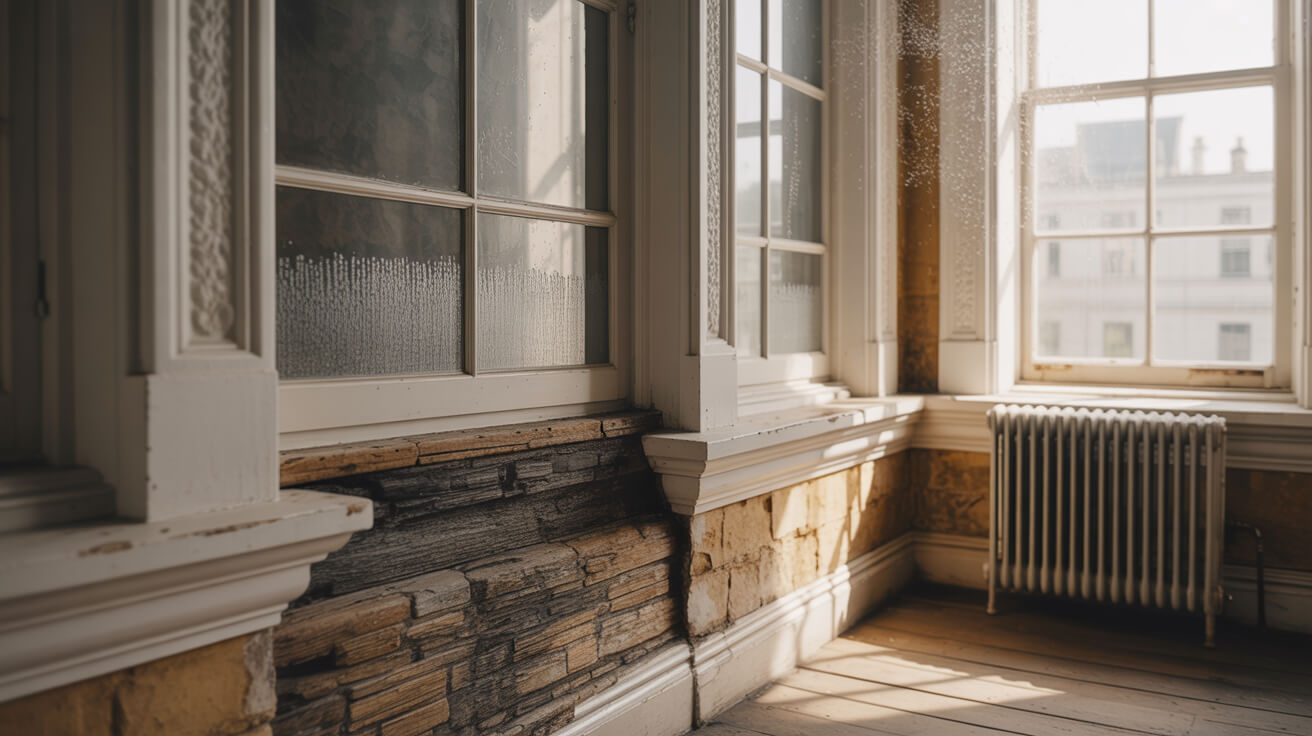
building regulations Part L imposes mandatory energy efficiency requirements, aiming to reduce heat loss and improve thermal performance in buildings. In heritage structures, where original materials and construction techniques often do not align with modern energy standards, mitigating thermal bridging is essential not only for lowering energy consumption but also for preventing moisture-related issues such as condensation and damp. This regulation provides a framework for balancing the preservation of historical fabric with the implementation of contemporary energy-saving measures.
Etymology or Name Origin
The term “thermal bridging” originates from the observation that certain structural elements create “bridges” across different materials, facilitating enhanced heat flow. “Part L” refers to the segment of building regulations dedicated to energy performance. Historical documents and early scholarly research laid the groundwork for integrating these concepts into modern regulatory frameworks, thereby connecting past construction practices with present-day energy efficiency standards.
Overview / Context
heritage properties and listed buildings present unique challenges in achieving energy efficiency while preserving historical integrity. The regulatory framework, particularly Building Regulations Part L, is designed to address inefficiencies that arise from thermal bridges—areas where heat bypasses insulation. In these structures, the intersection of aged construction techniques and modern retrofitting requirements often leads to intricate dilemmas regarding moisture management and energy loss. Regulatory policies account for these complexities by urging conservation methods that are sensitive to traditional materials and methods, ensuring that energy performance does not compromise conservation standards.
Advances in diagnostic technologies, such as infrared thermography and precision moisture measurements, have been incorporated to better detect and manage thermal bridging. Additionally, these regulations influence design decisions by mandating specific performance criteria, which in turn stimulate innovation in retrofit technologies and conservation practices.
History
The historical evolution of energy efficiency regulations is deeply intertwined with the emergence of thermal bridging as a recognised issue in architecture. From early 20th-century construction practices, where traditional masonry and timber frameworks were prevalent, to the modern era of high-performance insulation, buildings have undergone significant transformation. Heritage properties, built with methods that predate modern insulation techniques, have found themselves uniquely vulnerable to the inefficiencies described by contemporary energy regulations.
Origins and Early Developments
In the early developments of building science, energy efficiency was not a prime consideration. Constructed with locally available materials and without modern insulation, heritage structures naturally experienced variable internal temperatures. The concept of thermal bridging emerged as engineers began to analyse heat flow and identify areas where differences in material properties caused excessive energy loss. Early studies were predominantly theoretical but paved the way for recognising that retrofitting these buildings required specialised approaches.
Industrial Emergence and Regulatory Evolution
The industrial revolution catalysed an increased demand for better energy management within urban infrastructure. As cities expanded and energy costs rose, regulatory bodies began to introduce measures to curb heat loss. Building Regulations Part L was consequently introduced as a policy tool to enforce minimum energy performance standards. These regulations evolved in parallel with the development of diagnostic tools capable of mapping thermal performance, such as thermographic cameras and moisture metres. Over time, as the focus shifted from mere insulation to the nuanced management of thermal bridging, heritage properties began to be evaluated through this new lens.
Modern Updates and Contemporary Practices
Modern revisions of Building Regulations Part L have incorporated lessons learned from historical retrofitting projects and technological advancements. In the contemporary landscape, these revisions aim to integrate sustainability with conservation, ensuring that energy efficiency improvements do not detract from the aesthetic and structural integrity of heritage properties. Today, the application of these regulations has led to sophisticated retrofit methods that combine traditional materials with modern design principles, thereby preserving the cultural significance of heritage buildings while enhancing their energy performance.
Concept / Description
Thermal bridging is a phenomenon that occurs when a component with high thermal conductivity creates an unintentional pathway for heat to escape or enter a building. Typically observed at junctions where different construction elements meet, such as window frames, balcony connections, or structural beams, thermal bridging can lead to significant energy inefficiencies. In heritage properties, these bridges are often compounded by variances in material properties between modern insulation and traditional building materials.
The Mechanics of Thermal Bridging
At its core, thermal bridging is governed by the laws of heat transfer. In any building envelope, heat flows from warmer to cooler areas. When materials with low insulating qualities—such as concrete, metal, or stone—interrupt the continuity of the insulation layer, they create localised “bridges” through which heat rapidly escapes. This results in colder surface temperatures, increasing the likelihood of condensation and subsequent damp problems. Key metrics such as the U-value (thermal transmittance) are used to quantify the effectiveness of insulation and to pinpoint areas where thermal bridging is most pronounced.
Damp Proofing and Its Interrelation with Thermal Bridging
In the context of heritage properties, managing moisture is as critical as improving energy performance. Thermal bridging can precipitate damp-related issues by creating cooler areas where moisture condenses, leading to the growth of mould and deterioration of materials. damp proofing measures aim to mitigate these risks by applying specialised treatments that prevent moisture from permeating through building envelopes. However, these treatments must be compatible with the existing fabric of heritage buildings, which often necessitates a balance between modern damp proofing techniques and historical conservation principles.
Integration with Building Regulations
Building Regulations Part L serves as the regulatory backbone for these technical challenges by stipulating performance standards that must be achieved to minimise heat loss and damp issues. By informing the design and implementation of damp proofing strategies in heritage properties, these regulations promote the use of techniques that reduce thermal bridging and safeguard the structural and cultural integrity of older buildings.
Functionality / Purpose / Applications
The primary function of mitigating thermal bridging in the realm of Building Regulations Part L is to enhance building energy performance while simultaneously preserving the character and integrity of heritage structures. Practical applications extend across several interrelated areas, each addressing specific challenges associated with older construction techniques and the need for modern energy efficiency.
Practical Use in Energy Efficiency
Thermal bridging directly contributes to increased energy consumption by allowing unregulated heat flow. By identifying and mitigating these bridges, retrofitting efforts improve the overall thermal performance of a building. This reduction in heat loss not only leads to savings on energy costs but also helps in maintaining more consistent interior temperatures, which is particularly valuable in environments where traditional building methods are prevalent.
Applications in Damp Proofing
In heritage properties, the purpose of addressing thermal bridging extends beyond energy conservation. It is also crucial for effective damp proofing. Locally lower surface temperatures due to bridging can lead to condensation, which in turn fosters an environment conducive to damp and mould growth. Practical applications include the integration of specialised insulation, the installation of damp proof courses that are compatible with historic materials, and the careful design of retrofit systems that accommodate both modern and traditional construction aspects.
Implementation in Heritage Retrofits
The application of these principles in the field of heritage conservation necessitates a nuanced approach. Retrofit strategies that target thermal bridging must incorporate techniques that respect the original building materials and architectural features. This often involves the use of breathable plasters and insulation systems designed to work harmoniously with the building’s fabric. Energy simulations and diagnostic tools, like infrared thermography, guide the process to ensure that the interventions meet both the technical performance requirements and the stringent conservation guidelines imposed on listed buildings.
Classifications / Types / Variants
Thermal bridging and damp proofing techniques can be classified into various types and methods, each with distinct characteristics that influence their applicability in heritage settings.
Types of Thermal Bridging
Thermal bridges can be categorised based on their physical manifestation and the manner in which heat is transferred:
- Point Thermal Bridges: Localised disruptions, such as window reveals and small structural junctions, that result in isolated spots of significant heat loss.
- Linear Thermal Bridges: Extended elements, such as beams, balconies, or continuous structural components, that form a continuous pathway for heat transfer.
- Planar Thermal Bridges: Broad areas affected by thermal discontinuity, often occurring in instances where insulation is compromised across large surfaces, such as walls with irregular thickness or degraded mortar.
Variants of Damp Proofing Systems
damp proofing approaches differ based on the materials used and the preservation requirements of heritage structures:
- Chemical Damp Proof Courses (DPCs): Involves the injection of chemical agents into walls to form a barrier against moisture ingress. This method is often adapted to minimise visual impact while maintaining effectiveness.
- Physical Damp Proof Membranes: Utilised either internally or externally, these membranes are designed to be vapour-permeable, allowing moisture to escape while preventing its passage through the walls.
- Hybrid Systems: These systems integrate both chemical and physical methods to leverage the advantages of each, resulting in a solution that balances thermal performance, moisture control, and heritage preservation.
Material and Method Categorization
Materials used in damp proofing and thermal management are pivotal in dictating performance:
- Traditional, High-Conductivity Materials: Often found in heritage buildings (e.g., stone, concrete, and mortar), these materials inherently contribute to thermal bridging.
- Modern Insulation Materials: Engineered to offer enhanced thermal resistance while being compatible with traditional materials, these include breathable plasters and advanced damp proof membranes.
- Hybrid Assemblies: These combine historical construction techniques with modern material science to create systems that meet both regulatory and conservation imperatives.
Systems / Tools / Methodologies
A suite of systematic approaches and tools underpins the technical management of thermal bridging in heritage properties. These systems ensure that retrofitting measures are both effective and compliant with evolving energy standards.
Diagnostic Techniques and Equipment
To accurately identify and quantify thermal bridging, a range of advanced diagnostic tools are employed:
- Infrared Thermography: A non-invasive imaging technique that highlights variations in surface temperatures, thereby revealing potential thermal bridges.
- Moisture Metres: Precision instruments that measure the moisture content of building materials, facilitating the detection of areas susceptible to condensation.
- Thermal Imaging Cameras: Utilise high-resolution sensors to capture comprehensive temperature profiles, enabling detailed analysis of a building’s thermal performance.
- U-value Measurement Devices: Tools that assess the overall thermal transmittance of building elements, critical for evaluating whether retrofit measures align with regulatory specifications.
Analytical and Retrofit Methodologies
The process of mitigating thermal bridging in heritage buildings involves methodological rigour:
- Energy Modelling Software: Simulation tools that predict the thermal behaviour of a building following retrofit interventions. Such models play a vital role in planning and optimising energy performance.
- Retrofitting Protocols: Step-by-step guidelines that detail the procedures for installing damp proof courses and insulation systems. These protocols are designed to safeguard historical materials while ensuring they meet modern efficiency standards.
- In-Situ Performance Testing: Includes scheduled inspections and data logging, which provide real-time feedback on the effectiveness of damp proofing measures and the sustained performance of insulation.
Maintenance and Monitoring Systems
Long-term success in mitigating thermal bridging is achieved through proactive maintenance:
- Sensor Networks and Data Loggers: These tools continuously track both thermal and moisture data, alerting stakeholders to potential setbacks before they escalate.
- Benchmarking Against Standards: Performance data is regularly compared with predefined benchmarks, such as U-values and heat flux measurements, to ensure that the building maintains compliance with Building Regulations Part L.
- Scheduled Diagnostic Reviews: Periodic inspections by conservation professionals and surveyors help in adjusting retrofit measures as the building ages and environmental conditions evolve.
Stakeholders / Entities Involved
The management of thermal bridging within heritage properties is a multidisciplinary effort involving several key stakeholders:
Regulatory Authorities and Standards Organisations
Bodies such as the Department for Communities and Local Government, Historic England, and various standards organisations (e.g., BS6576, PAS2035) are central to the enforcement of energy efficiency and conservation guidelines. Their role is to prescribe the performance parameters and safeguard both the technical and cultural aspects of heritage properties.
Conservation Professionals
Conservation architects, heritage surveyors, and damp proofing specialists contribute their expertise to assess building conditions and recommend retrofit strategies that harmonise modern efficiency with historical preservation. Their evaluations are based on both technical diagnostics and conformity with conservation ethics.
Property Owners and Retrofit Specialists
Owners of heritage properties, along with retrofit artisans and engineering firms, are responsible for implementing approved measures. Their collaboration with regulatory bodies ensures that solutions not only achieve energy savings but also maintain the historical and aesthetic integrity of the structure.
Financial and Insurance Entities
mortgage lenders and insurance companies are increasingly attentive to the implications of thermal bridging on property valuation and long-term operational costs. Their assessments often incorporate regulatory compliance and energy performance data, which in turn influence financing conditions and risk management strategies.
Legal / Regulatory / Ethical Considerations
The implementation of thermal bridging mitigation strategies in heritage properties is framed by a robust legal and regulatory context as well as ethical considerations:
Legislative Framework
Building Regulations Part L provides the statutory foundation for energy efficiency in new and existing buildings. Complementary standards, including BS6576 and PAS2035, further delineate the requirements for literature on damp proofing and thermal performance. Compliance with these standards is ensured through stringent enforcement by local authorities and conservation agencies. Within heritage contexts, additional measures such as Listed Building Consent ensure that any alteration preserves the building’s historical integrity.
Regulatory Enforcement
Ensuring compliance requires systematic inspection processes and certification mechanisms. Regulatory inspections, conducted by certified professionals, validate that retrofit measures adhere to the prescribed guidelines. Regular monitoring and data logging complement this process, providing continuous oversight of a building’s energy performance and moisture control.
Ethical and Conservation Considerations
Retrofitting heritage properties involves a delicate balance between achieving modern energy efficiency and preserving historical authenticity. Ethical conservation practices emphasise minimal intervention and the use of methods that respect the original building fabric. This approach aligns with broader cultural mandates to safeguard architectural heritage for future generations, ensuring that any adaptation contributes positively to the building’s legacy.
Performance Metrics / Data / Measurements
Effective management of thermal bridging requires the application of precise metrics and diagnostic measurements:
Thermal Performance Indicators
The U-value, which quantifies the rate of heat transfer through building components, is a fundamental metric. Lower U-values are indicative of higher insulation quality and reduced energy loss. Additional indicators include heat flux measurements and dew point calculations, both of which help in assessing areas where condensation may lead to damp problems.
Measurement Techniques
- Infrared Thermography: Enables the creation of temperature maps that pinpoint areas of excessive thermal loss.
- Moisture Metres and Hygrometers: Measure the internal moisture content and relative humidity, respectively, thus facilitating early detection of damp issues.
- Energy Modelling: Software simulations project the effects of retrofit measures on a building’s overall energy performance, providing invaluable guidance for planning interventions.
Data Collection and Analysis
Data acquired through these methods is compiled into performance benchmarks that are compared against national energy efficiency standards. Such iterative analysis is imperative for validating the success of retrofitting strategies and ensuring that the measures remain effective over time.
Challenges / Barriers / Limitations
The application of thermal bridging mitigation techniques in heritage properties encounters several challenges:
Operational and Technical Challenges
Heritage buildings are characterised by a diverse array of materials and construction methods not originally designed for modern insulation. Variations in wall thickness, material degradation, and uneven thermal properties complicate the detection and remediation of thermal bridges. Technical challenges also arise from the need to integrate new insulation materials without compromising the building’s structural integrity.
Regulatory and Conservation Barriers
Stringent historical preservation guidelines often limit the range of permissible interventions. Regulatory barriers, such as strict Listed Building Consent requirements, pose considerable challenges to retrofitting efforts. These constraints mean that any approach to manage thermal bridging must be carefully designed to avoid altering the building’s historical fabric, which can further complicate the selection and application of modern damp proofing systems.
Economic and Practical Limitations
The cost of retrofit projects in heritage properties is typically high, partly due to the specialised materials and techniques required. In many cases, property owners are confronted with the challenge of balancing significant upfront investment against promised long-term energy savings. Additionally, legacy buildings may require extensive maintenance regimes, further impacting the feasibility of comprehensive thermal bridging solutions.
Impact / Influence / Legacy
Addressing thermal bridging through regulatory compliance and targeted retrofit measures has broad implications for the energy performance, value, and longevity of heritage properties.
Influence on Building Performance
By mitigating thermal bridging, conservation strategies significantly reduce heat loss and improve overall energy performance. The resultant energy efficiency gains lead to measurable reductions in operational costs and contribute to a more consistent internal thermal environment, which is essential for occupant comfort.
Economic and Valuation Implications
Effective management of thermal bridging ensures that heritage properties maintain greater market value by aligning with contemporary energy standards. Enhanced energy performance translates into improved energy efficiency ratings, which are increasingly critical in mortgage assessments and insurance evaluations. Ultimately, this results in a sustainable economic outlook for property owners and stakeholders.
Legacy and Conservation Outcomes
The long-term legacy of addressing thermal bridging is profound in terms of both structural preservation and cultural conservation. Sustainable retrofitting strategies preserve the historical fabric of heritage buildings while ensuring that they meet modern performance standards. Such interventions safeguard the architectural integrity of these structures, ensuring that they remain vital and functional landmarks for future generations.
Future directions, cultural relevance, and design discourse
Emerging technologies and evolving regulatory frameworks suggest considerable advancements in how thermal bridging in heritage properties will be managed. Next-generation diagnostic tools, including high-resolution infrared imaging and smart sensor networks, are set to enhance the detection and real-time monitoring of thermal anomalies. The integration of digital twin technology and predictive energy modelling promises to refine retrofit strategies, enabling more precise interventions that adapt to both current and future performance criteria.
Ongoing research continues to investigate innovative materials and retrofit methodologies aimed at reducing thermal bridging without compromising the aesthetic or historical value of heritage structures. Developments in ultra-breathable plasters, adaptive insulation systems, and hybrid damp proofing techniques are central to these advancements. Such innovations provide a pathway to enhance energy performance while ensuring conservation practices remain aligned with cultural and architectural imperatives.
The regulatory landscape is also evolving. Future revisions of Building Regulations Part L, in conjunction with refinements in standards such as BS6576 and PAS2035, are likely to incorporate more flexible, outcome-oriented guidelines. These revisions may allow for increased innovation in retrofit strategies, providing heritage property owners with a wider range of options that satisfy both modern energy efficiency requirements and conservation objectives.
International exchanges in conservation practices contribute further to the discourse, as practices from different cultural contexts provide insights into alternative approaches that may be adapted to local conditions. These global influences help shape a more holistic understanding of how heritage conservation can evolve in the face of modern energy challenges. The integration of multidisciplinary research—from materials science to cultural studies—fosters a collaborative approach that benefits all stakeholders involved in heritage preservation.
Technological innovation, particularly in the realm of digital monitoring and predictive analytics, is set to revolutionise long-term building performance management. The use of wireless sensor networks, continuous data logging, and real-time feedback loops promises to significantly enhance the maintenance and sustainability of heritage structures. These tools enable property managers and conservation professionals to proactively manage thermal bridging effects, ensuring that conservation efforts remain dynamic and responsive to changing conditions.
Furthermore, the ethical dimensions of heritage retrofitting continue to emerge as a topic of academic and professional debate. There is a growing movement toward minimal intervention strategies that honour the original construction techniques, using modern technology solely to augment rather than replace the historical character of a building. The balance between innovation and preservation is at the forefront of design discourse, influencing both policy and practice in the conservation community.
Design discussions increasingly emphasise integrating thermal performance into the core aesthetic and structural planning of heritage properties. Architects and conservation specialists work collaboratively to ensure that retrofit measures do not detract from the building’s character. Instead, they seek to enhance both its visual and functional attributes through discreet solutions that make use of advanced insulation techniques and innovative damp proofing measures.
As digital tools become more sophisticated, the role of artificial intelligence in predictive maintenance and performance optimization will grow. Advanced modelling techniques enable the simulation of various retrofit scenarios, providing a clearer picture of the potential impact of different interventions. Such tools not only improve decision-making but also contribute to a more resilient and adaptable conservation strategy that preserves the long-term cultural value of heritage buildings.
In summary, the future of managing thermal bridging in heritage properties lies at the intersection of technology, regulation, and conservation ethics. By embracing innovative diagnostic tools and adaptive retrofit methodologies, property owners and professionals can achieve a harmonious integration of modern energy efficiency with historical preservation. This multifaceted approach promises to enhance the sustainability of heritage structures, ensuring that they continue to serve as functional and treasured legacies in a rapidly evolving built environment.
