

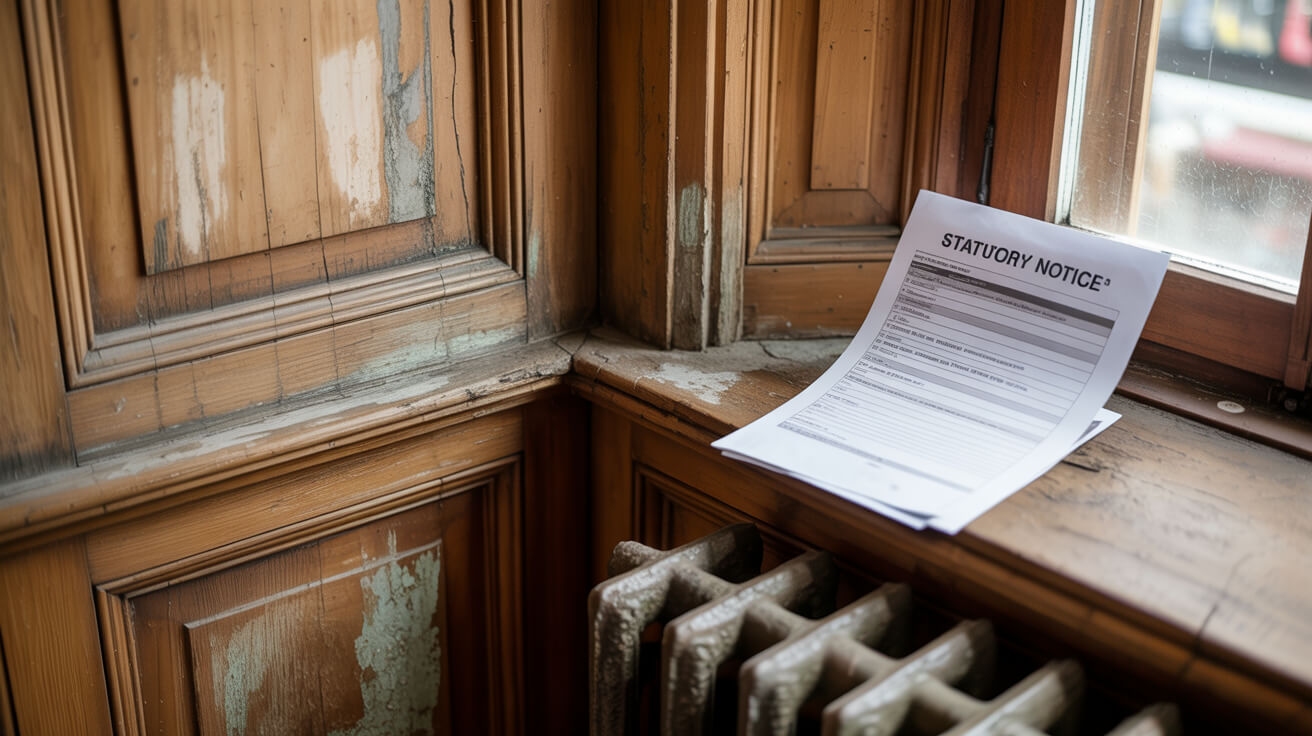
Statutory nuisance orders arise from environmental and housing legislation and are applied when properties exhibit chronic damp issues that exceed acceptable thresholds. In heritage contexts, these orders fulfil a dual role: they ensure that public health is protected while upholding the stringent conservation standards necessary to maintain a building’s historical character. The enforcement of these orders is based on rigorous inspection protocols and diagnostic techniques such as moisture metre readings, thermal imaging, and substrate analysis, with findings documented by professional surveyors.
Etymology or Name Origin
The expression “statutory nuisance” finds its origin in legislation developed in the early twentieth century, aimed at curbing conditions that negatively influence the general amenity of a locality. Initially rooted in public health responses to urban decay, the term has since evolved to encompass a broader range of adverse environmental conditions. In the context of damp proofing, statutory nuisance orders were introduced as legal mechanisms to address moisture-induced deterioration, a problem that became increasingly significant as industrialization and urban habitation accelerated. Over time, the terminology has been refined to differentiate between ordinary nuisances and those conditions that present a clear health hazard or jeopardise the structural integrity of heritage assets.
Overview / Context
Statutory nuisance orders are used as instruments of regulatory intervention to remediate substandard conditions where dampness presents a persistent threat to public and environmental health. These orders typically function within a framework of environmental protection and housing legislation, incorporating established building standards and technical benchmarks. Their application is particularly complex when it comes to heritage properties and listed buildings, where conventional remedial methods must be reconciled with the preservation of historical fabric. In this context, statutory nuisance orders play a critical role in balancing the obligations of property owners with the collateral need to maintain cultural heritage and sustain the legacy of historic constructions.
This enforcement mechanism is part of a broader regulatory and procedural ecosystem that includes detailed inspections, comparative analysis with contemporary standards (such as BS6576, BS8102, and PAS2035), and a process of continual monitoring and reassessment. These orders are not only reactive measures but also serve as preventive tools; periodic reviews and follow-up inspections help ensure that remedial actions remain effective over time and that property conditions do not revert to a state of nuisance.
History
The evolution of statutory nuisance orders is intimately tied to the rise of modern environmental and public health legislation over the past century.
Origins in Public Health Legislation
The early twentieth century witnessed significant urban growth, during which the impact of substandard living conditions became a public health priority. Local authorities were granted the power to address nuisances under early public health acts, setting a legislative precedent for subsequent regulatory interventions. Originally, the term nuisance was used in a broad legal context to describe any condition adversely affecting community welfare. Dampness emerged as a particular concern due to its association with mould growth, respiratory issues, and structural decay. Over time, as understanding of building science advanced, a more defined legal framework evolved specifically targeting moisture issues.
Industrial Emergence and Enforcement Practices
As urbanisation intensified and industrial activities increased, the frequency and severity of damp problems in dwellings rose markedly. This led to the institutionalisation of enforcement practices whereby local authorities began to systematically inspect properties and issue remedial orders. The mid-century period saw the introduction of technology-based diagnostic methods such as moisture metres and thermal imaging, which provided objective measurements of damp levels. During this era, the integration of technical standards into statutory orders became more prevalent, allowing for a more scientific approach to enforcement.
Contemporary Evolution
In recent decades, statutory nuisance orders have been refined to address modern challenges in building conservation, particularly in heritage and listed properties. Legislative changes have strengthened enforcement mechanisms and clarified the thresholds at which damp becomes a statutory nuisance. Modern orders incorporate detailed guidelines from building standards such as BS6576 and BS8102, as well as conservation frameworks like PAS2035. These developments ensure that remedial measures are both effective in mitigating damp and sensitive to the conservation needs of historic structures. Today, statutory nuisance orders are viewed as critical regulatory tools that bridge the gap between maintaining public health and preserving historic assets, ensuring that remedial actions are undertaken in a manner that upholds both safety and heritage integrity.
Concept / Description
Statutory nuisance orders represent a formal regulatory response designed to correct conditions that are deemed injurious to community welfare. In the realm of damp proofing for heritage properties, these orders become more than administrative procedures; they are intricate legal instruments that balance the imperatives of health, safety, and conservation.
Definition and Core Principles
Statutory nuisance orders are issued under the authority granted by environmental and housing legislation. These orders compel property owners to undertake specific remedial actions when their properties exhibit conditions that qualify as a statutory nuisance. The core principles underlying these orders involve:
- Identification of Hazardous Conditions: Conditions such as chronic dampness, mould proliferation, and decay are systematically documented and categorised.
- Objective Measurement: The use of calibrated instruments (e.g., moisture metres, thermal cameras) ensures that the conditions are objectively measured and validated against normative standards.
- Mandated Remediation: Upon confirmation, the issuing authority mandates corrective measures, which can include physical remediation, enhanced maintenance protocols, or, in extreme cases, further legal action.
- Continuous Monitoring: Follow-up inspections and continuous monitoring are integral to verify that remedial measures remain effective over time and that the property does not revert to its previous state of disrepair.
Underlying Mechanisms and Processes
The administrative process for statutory nuisance orders unfolds through several critical phases:
- Inspection and Diagnosis: Expert surveyors conduct on-site assessments, employing diagnostic tools to establish baseline conditions. Findings are documented in detailed reports.
- Regulatory Evaluation: Inspection data are then evaluated against regulatory standards (e.g., BS6576, BS8102) to determine if the condition satisfies the statutory threshold.
- Issuance of Orders: If warranted, the local authority issues a statutory nuisance order mandating remedial action. The order specifies the nature of the required intervention and often includes a deadline for compliance.
- Remediation and Verification: Property owners must execute the prescribed remedial measures. Subsequent inspections are performed to verify compliance, and continuous monitoring systems may be installed to track ongoing conditions.
- Documentation and Record Keeping: Detailed records of both the diagnostic process and remedial actions are maintained for future reference and potential legal proceedings.
Structural and Functional Elements
A statutory nuisance order typically comprises several key components:
- Legal Citation: References to the legislative and regulatory framework that empowers the order.
- Diagnostic Evidence: Data collected from on-site inspections, including moisture content, temperature variations, and visual signs of damp-related deterioration.
- Remediation Prescriptions: Specific instructions outlining the required remedial actions, which may vary based on the severity of the damp condition.
- Enforcement Provisions: Clauses that specify the consequences of non-compliance, which can include fines or further legal measures.
- Monitoring Requirements: Provisions for ongoing evaluation to ensure that remedial actions continue to meet the required standards.
Functionality / Purpose / Applications
Statutory nuisance orders serve as critical tools in the enforcement of health, safety, and environmental standards within the built environment. Their application extends across diverse contexts, but in the field of damp proofing for heritage properties, they assume unique significance.
Protective and Preventive Functions
The primary aim of statutory nuisance orders is to protect public health by ensuring that no property remains in a state that could endanger its occupants. Damp conditions, if left unchecked, can lead to:
- Structural Deterioration: Long-term moisture exposure can weaken building materials, leading to instability and decay.
- Health Hazards: Persistent dampness can foster mould growth and the proliferation of allergens, contributing to respiratory and other health issues.
- Property Devaluation: Continual damp issues detract from a property’s market value, particularly in heritage contexts where the historical value is intertwined with physical condition.
By mandating timely remedial interventions, statutory nuisance orders provide a preventive mechanism that curbs progressive deterioration and mitigates risks before they escalate into critical failures.
Enforcement and Compliance
These orders are not merely theoretical constructs; they are implemented through a well-organised enforcement process involving multiple stakeholders. Key aspects include:
- Inspection Protocols: Detailed evaluations using advanced diagnostic tools ensure that enforcement decisions are based on objective evidence.
- Remedial Order Execution: Once an order is issued, property owners are legally bound to rectify the causative conditions within the stipulated timeframe.
- Legal and Financial Implications: Non-compliance may trigger additional legal proceedings, including fines or compulsory remedial processes. In this way, statutory nuisance orders function as both a compliance mechanism and a deterrent.
Specific Applications in Heritage and Listed Buildings
Within heritage properties and listed buildings, the application of statutory nuisance orders entails particular sensitivity due to the dual mandate of preservation and safety:
- Balancing Conservation with Modern Standards: Remedial actions must be carefully chosen to avoid altering the historic fabric of the building while still addressing the underlying damp issue.
- Tailored Remediation Strategies: Techniques such as low-impact damp proof courses and breathable plasters are preferred in heritage contexts. These methods reduce the risk of damaging original materials while ensuring effective moisture control.
- Integrated Monitoring Systems: Heritage properties often require continuous monitoring to confirm that interventions remain effective. Digital data logging and periodic re-inspections are critical in this regard.
Classifications / Types / Variants
Damp proofing conditions are diverse, and statutory nuisance orders are structured to address a spectrum of issues, from minor dampness to severe degradation. Understanding the classifications is essential to formulating appropriate remedial actions and enforcement strategies.
Categories of Damp Conditions
- Rising Damp: This type occurs when moisture ascends through porous building materials via capillary action. Signs include salt efflorescence, damp patches along lower walls, and subtle discoloration.
- Penetrating Damp: Caused by the ingress of water through external defects such as cracks or faulty render, penetrating damp is typically characterised by localised water damage and damp patches.
- Condensation Damp: This results from high indoor humidity levels and inadequate ventilation, especially in colder climates. It is often indicated by condensation on cold surfaces and mould formation in poorly ventilated areas.
- Hygroscopic Damp: Occurring when building materials absorb moisture from the air due to their chemical composition, this Type Can lead to prolonged saturation and material deterioration.
- Bridging Damp: A condition where dampness spreads horizontally across building components, often caused by ineffective or improperly corrected remedial measures.
Severity Levels and Their Implications
The enforcement of statutory nuisance orders generally depends on the severity of the damp condition:
- Low-Level Indicators: Manifestations such as minor salt staining or slight peeling of paint may signal the early onset of damp, prompting a warning or minor remedial suggestions.
- Moderate Conditions: Elevated moisture readings and observable degradation of materials signal a more active condition that often requires immediate remedial action.
- Severe Cases: Conditions that threaten the overall structural integrity of a building or pose serious health risks are classified as urgent. In such cases, statutory nuisance orders are imposed with immediate effect, involving comprehensive diagnostic and remedial measures.
Systems / Tools / Methodologies
The accurate diagnosis and effective remediation of damp in historic properties require robust systems, advanced tools, and methodologically sound approaches. These systems ensure that statutory nuisance orders are supported by solid technical evidence.
Diagnostic Systems and Tools
- Moisture Metres: Essential for quantifying the moisture content in building materials, these instruments provide the numerical data necessary for determining whether damp levels meet statutory thresholds.
- Thermal Imaging Cameras: These devices generate heat maps that reveal cold spots and moisture anomalies, aiding in the identification of areas where damp ingress is likely.
- Salt Test Kits: Utilised to measure salt efflorescence on walls, these kits help in diagnosing rising damp by indicating the movement of moisture and dissolved salts within masonry.
- Digital Data Loggers: These systems continuously monitor moisture levels over time, allowing inspectors to understand the progression of damp issues and assess the long-term effectiveness of remedial measures.
- Non-Invasive Substrate Analysis: Techniques that evaluate the internal condition of walls without physically altering the historic fabric provide a means to assess internal deterioration while preserving original materials.
Remedial Methodologies in Heritage Contexts
- Low-Impact Damp Proof Courses (DPC): Implemented with materials compatible with historic construction, these courses are designed to halt the upward movement of moisture without compromising the building’s heritage characteristics.
- Breathable Plaster Systems: These treatment methods allow moisture to escape while providing a protective barrier that preserves the building’s original appearance.
- Heritage-Safe Timber Treatments: For structures with timber elements, specialised treatments that prevent decay while maintaining authenticity are critical.
- Digital Monitoring and Inspection Protocols: Continuous monitoring via sensor networks ensures that remedial actions persist in their effectiveness, and repeat inspections guarantee compliance with statutory standards.
Methodological Approach
A comprehensive approach to managing statutory nuisance orders combines multiple disciplines:
- Scientific Measurement: Objective data is gathered through technologically advanced diagnostic tools, ensuring that assessments are based on quantifiable evidence.
- Legal Interpretation: Enforcement is predicated upon clear and consistent application of environmental and housing legislation, reinforced through standards and guidelines.
- Heritage Conservation Principles: Remediation strategies are chosen to respect the historic fabric of properties, aligning with conservation best practices and preservation mandates.
Stakeholders / Entities Involved
A multipronged enforcement of statutory nuisance orders involves a diverse range of stakeholders whose collaboration is essential to achieving successful damp remediation in heritage contexts.
Principal Stakeholders
- Homeowners and Landlords: These parties are responsible for the maintenance and condition of their properties. They must comply with statutory orders to remediate damp issues, ensuring that their buildings meet both safety and conservation standards.
- Surveyors and Damp Proofing Specialists: Professionals who conduct detailed inspections and diagnostic assessments provide the evidential basis for the enforcement of statutory nuisance orders. Their expertise is critical in formulating remedial strategies that are both effective and sensitive to heritage considerations.
- Local Authorities: Government bodies with the mandate to enforce public health and safety regulations are responsible for issuing statutory nuisance orders. They also oversee compliance and monitor the efficacy of remedial actions.
- Conservation Officers: These specialists ensure that remediation efforts respect the historic and architectural value of heritage properties, balancing modern enforcement measures with preservation requirements.
- Regulatory and Oversight Agencies: Organisations that develop and update building standards (e.g., standards boards for BS6576, BS8102, and PAS2035) and environmental guidelines play a crucial role in shaping the enforcement framework.
- Insurance Providers and Legal Advisors: These entities are indirectly involved as the financial and legal ramifications of non-compliance can affect property valuations and insurance claims.
Institutional Collaboration
The enforcement process also relies on the convergence of multiple institutional actors. For instance, local councils collaborate with environmental agencies to ensure that statutory nuisance orders are grounded in both scientific evidence and legal authority. Meanwhile, conservation bodies work alongside regulatory agencies to ensure that remedial actions do not compromise the cultural heritage of a property.
Legal / Regulatory / Ethical Considerations
The legal structure underpinning statutory nuisance orders is multifaceted, encapsulating statutory mandates, building standards, and ethical imperatives that influence enforcement decisions.
Legislative and Regulatory Framework
- Environmental Protection Act 1990: This cornerstone legislation grants local authorities the power to designate conditions as statutory nuisances when they pose a threat to community welfare.
- Building Regulations (Part C, etc.): These regulations define moisture control standards and set forth technical requirements that must be adhered to in property maintenance.
- Technical Standards: Established benchmarks such as BS6576 and BS8102 provide the technical criteria necessary for diagnosing and addressing damp conditions, while PAS2035 offers guidelines specifically tailored for retrofitting heritage properties.
- Heritage and Conservation Guidelines: These guidelines ensure that any remedial action undertaken does not adversely affect the historical authenticity or architectural integrity of heritage properties.
Enforcement Process and Legal Ramifications
The enforcement process is characterised by:
- Inspection and Documentation: Thorough on-site evaluations by qualified professionals serve as the basis for enforcing statutory nuisance orders. These inspections are documented in detailed surveyor reports.
- Issuance of Orders: Based on diagnostic evidence, local authorities issue statutory nuisance orders, specifying required remedial actions and enforceable deadlines.
- Compliance and Legal Action: Non-compliance with an order can trigger additional legal proceedings, including fines or compulsory remedial measures.
- Ethical Responsibilities: The imposition of statutory nuisance orders comes with the ethical obligation to balance public safety with the preservation of heritage value. This involves ensuring that remediation methods are not only effective but also minimally invasive to historic fabric.
Ethical and Social Considerations
The regulation of damp in heritage properties raises significant ethical and social issues:
- Preservation vs. Modern Demand: Society must navigate the tension between maintaining historical authenticity and ensuring that properties meet modern safety standards.
- Economic Impact: The cost of remedial actions can be substantial, and statutory orders often have significant financial implications for property owners, influencing insurance claims and market valuations.
- Community Welfare: Effective enforcement of statutory nuisance orders ultimately promotes the long-term health and safety of occupants, mitigating risks associated with mould, structural decay, and other damp-related hazards.
Performance Metrics / Data / Measurements
Evaluating the effectiveness of statutory nuisance orders in the prevention and remediation of damp relies on a combination of quantitative and qualitative measures. These metrics are instrumental in guiding regulatory practices and ensuring that remedial actions yield sustained improvements.
Key Performance Indicators
- Moisture Levels: Regular measurements using moisture metres and thermal imaging devices provide a baseline for determining whether damp conditions are within acceptable limits.
- Compliance Rates: Data on the proportion of properties that achieve compliance following the issuance of a statutory nuisance order help assess enforcement effectiveness.
- Frequency of Inspections: The number of periodic inspections and the interval between initial remediation and follow-up assessments serve as indicators of persistent risk management.
- Remedial Outcome Quality: Success rates of remediation efforts, as indicated by improvements in diagnostic readings and restored structural integrity, offer measurable evidence of the effectiveness of statutory interventions.
- Temporal Data: Tracking the evolution of damp conditions over time, through digital logging and historical records, supports ongoing regulatory and remedial decision-making processes.
Data Collection Tools
| Tool | Function |
|---|---|
| Moisture Metres | Provide quantitative readings of moisture content in walls and materials. |
| thermal imaging cameras | Detect temperature anomalies and identify areas of potential water ingress. |
| Digital Data Loggers | Continuously record environmental conditions over time. |
| Surveyor Reports | Offer detailed documentation of on-site inspections and diagnostic findings. |
| Hygrometers | Measure ambient humidity levels to assess condensation risk. |
Challenges / Barriers / Limitations
While statutory nuisance orders are a vital regulatory tool, their implementation in heritage settings presents a number of challenges, spanning operational, economic, technical, and regulatory domains.
Operational and Technical Challenges
- Diagnostic Complexity: Heritage structures, due to their unique construction techniques and ageing materials, often pose challenges for standard diagnostic tools. The variability in material properties and construction methods can lead to inaccuracies in moisture readings.
- Accessibility Issues: The architectural layout of historic buildings may restrict access to certain sections, complicating comprehensive assessments.
- Integration of Modern Methods: Incorporating modern diagnostic and monitoring technologies into ancient buildings requires careful calibration and may necessitate non-invasive techniques that do not compromise structural integrity.
Economic and Social Barriers
- High Remediation Costs: The financial cost of effectively addressing damp in heritage properties is often substantial due to the need for specialised materials and techniques that preserve historical integrity.
- Economic Burden on Owners: The imposition of statutory nuisance orders may impose significant financial strain on property owners, influencing the overall market value of heritage properties.
- Community Dynamics: In densely populated areas with high concentrations of heritage buildings, the enforcement of statutory orders may lead to friction between stakeholders, including property owners, tenants, and local authorities.
Regulatory and Policy Limitations
- Conflicting Regulatory Frameworks: Heritage conservation guidelines, which are designed to preserve historical authenticity, often conflict with modern building regulations that prioritise safety and efficiency. This dichotomy can complicate the enforcement and interpretation of statutory nuisance orders.
- Variability in Enforcement: Success in issuing and enforcing statutory nuisance orders can vary significantly across jurisdictions. Differing local practices and resource constraints may lead to inconsistent application of county-wide or national standards.
- Legal Ambiguities: Ambiguities in statutory language or inconsistent interpretations of environmental and building regulations can hinder the decisiveness of enforcement actions and potentially lead to protracted legal battles.
Impact / Influence / Legacy
The legacy of statutory nuisance orders in the realm of damp proofing has had far-reaching effects on property conservation, regulatory practices, and the broader stewardship of heritage assets. Their influence is evident both in the tangible preservation of structures and in the evolving paradigms of environmental regulation.
Influence on Property Conservation
- Preservation of Structural Integrity: Statutory nuisance orders have played a critical role in halting the progression of damp-induced deterioration, thereby preserving the physical integrity of historic buildings. By mandating timely remediation, these orders help to prevent irreversible damage to masonry, plaster, and other building components.
- Cultural Heritage Preservation: In heritage properties, the careful enforcement of statutory orders ensures that remedial measures are implemented in a manner that respects and maintains the original architectural character. This balance of safety and conservation contributes to the longevity of cultural heritage.
- Economic Implications: Successful enforcement of statutory nuisance orders contributes positively to property valuations by preventing further decay and mitigating market risks associated with damp conditions. The structured approach to remediation supports long-term market stability for historic assets.
Regulatory and Procedural Legacy
- Evolution of Building Standards: The integration of technical standards, such as BS6576 and BS8102, within the statutory framework has driven a continuous refinement of building codes and remediation practices. These standards provide objective criteria that underpin enforcement actions, setting a benchmark for quality and effectiveness.
- Enhanced Monitoring Practices: The adoption of digital monitoring and continuous data logging has revolutionised the way authorities track the success of remedial measures. The legacy of these practices extends to a more proactive regulatory environment, where early detection and intervention are prioritised.
- Interdisciplinary Collaboration: The process of enforcing statutory nuisance orders has fostered closer collaboration among surveyors, conservation officers, legal experts, and regulators. This multi-disciplinary approach has enriched the overall framework for environmental and building regulation, ensuring that enforcement is both scientifically grounded and culturally sensitive.
Case Studies and Long-Term Outcomes
Empirical case studies have demonstrated that properties subject to statutory nuisance orders often experience significant improvements in both physical condition and market value. Longitudinal studies show that continuous monitoring and enforced compliance can lead to sustained reductions in moisture levels, improved indoor air quality, and stabilisation of structural performance. These outcomes have established statutory nuisance orders as a best practice in the management of damp within heritage contexts.
Future Directions, Cultural Relevance, and Design Discourse
The future of statutory nuisance orders, particularly as they relate to damp proofing in heritage and listed buildings, will be shaped by advancements in technology, evolving legislative frameworks, and ongoing cultural debates regarding preservation and modernization.
Technological Evolution
Emerging technologies promise to enhance the precision and efficiency of damp diagnosis and monitoring. Future developments are likely to include:
- Enhanced Sensor Networks: Integration of wireless sensor networks and IoT-based systems will provide real-time data on moisture conditions. These networks can offer continuous monitoring, enabling proactive enforcement and early detection of damp conditions.
- Advanced Imaging Techniques: Improvements in thermal imaging, coupled with machine learning algorithms, will allow for more accurate and automated interpretation of diagnostic images. This evolution will facilitate faster decision-making and more targeted remedial actions.
- Digital Data Analytics: The advent of big data and advanced analytics will empower regulatory authorities to aggregate and analyse data across multiple properties, enhancing predictive assessments and enabling more efficient allocation of enforcement resources.
Evolving Legislative and Regulatory Frameworks
Future legislative developments are expected to further refine the application of statutory nuisance orders. Anticipated changes include:
- Clarification of Legal Thresholds: Future amendments may clearly delineate the quantitative thresholds for enforcement, thereby reducing ambiguities in diagnosis and remediation.
- Harmonisation of Standards: Efforts may be directed toward reconciling heritage conservation guidelines with modern building codes, achieving a balance that accommodates both historical preservation and state-of-the-art safety measures.
- Enhanced Enforcement Protocols: With improved diagnostic technologies and data analytics, future regulatory practices may incorporate more flexible and responsive enforcement mechanisms, ensuring that orders are issued and followed up in a timelier manner.
Cultural and Design Implications
The intersection of statutory enforcement and heritage conservation carries significant cultural implications:
- Preservation of Cultural Identity: Heritage properties serve as tangible embodiments of cultural history. The application of statutory nuisance orders plays a role in preserving this cultural identity by ensuring that remedial actions do not irreversibly alter the historic character.
- Dialogue Between Tradition and Innovation: As conservation practices evolve, there will be an ongoing discourse regarding the incorporation of modern technologies into traditional structures. This dialogue will drive innovation while ensuring that the aesthetic and historical integrity is maintained.
- Community Engagement: The enforcement of statutory orders is likely to remain a subject of public interest, particularly in communities with high concentrations of heritage properties. Future practices may incorporate more participatory approaches, where local stakeholders are actively involved in monitoring and decision-making, enhancing collective ownership of cultural assets.
Prospects for Sustainable Heritage Management
The integration of sustainability into heritage conservation is an emerging trend that will impact the future trajectory of statutory nuisance orders. Innovations in eco-friendly remediation methods and energy-efficient building practices are expected to influence:
- Material Choices: Sustainable materials that both withstand moisture and maintain historical authenticity will become increasingly favoured. These materials will need to meet modern durability requirements while preserving traditional aesthetics.
- Energy Efficiency Integration: Future remedial strategies may incorporate measures to enhance energy efficiency, reducing not only moisture ingress but also lowering the overall environmental footprint of remedial work.
- Long-term Monitoring: Sustainable management practices will likely emphasise the use of renewable energy-powered monitoring systems and data analytics platforms, ensuring continuous, low-impact surveillance of property conditions over extended periods.
Collaborative and Interdisciplinary Research
Ongoing research and collaboration among experts in the fields of building conservation, environmental science, and regulatory law will drive future advancements:
- Interdisciplinary Projects: Collaborative research initiatives that bring together conservationists, surveyors, legal scholars, and data scientists will help to refine and optimise the enforcement processes. These projects may yield new methodologies for assessing and mitigating damp issues in heritage properties.
- Policy-Oriented Scholarship: Academic and industry research focused on the legal and regulatory dimensions of statutory nuisance orders will continue to influence both policy formulation and practical enforcement. Such research will contribute to a more nuanced understanding of the long-term impacts of these orders on property conservation and public health.
- Technological Innovation: Partnerships among technology developers, regulatory bodies, and heritage conservation professionals will foster the creation of new tools and systems. These innovations will ensure that enforcement practices remain at the cutting edge of diagnostic and remediation capabilities.
Future directions, cultural relevance, and design discourse
Looking ahead, the landscape of statutory nuisance orders in the context of damp proofing heritage properties continues to evolve. Emerging technological advancements are poised to enhance diagnostic precision and facilitate real-time monitoring of moisture conditions, leading to more efficient enforcement practices. Legislative refinements are anticipated to provide clearer thresholds for intervention, harmonising heritage conservation with modern regulatory demands. Furthermore, the cultural and design debates surrounding the delicate balance between maintaining historic integrity and ensuring public safety will persist, driving scholarly dialogue and innovative practices in sustainable heritage management. As multiple stakeholders, including property owners, surveyors, and regulatory authorities, engage in a collaborative process, statutory nuisance orders will remain a cornerstone of efforts to preserve the historical and environmental legacy of heritage properties while addressing the challenges posed by persistent damp conditions.
