

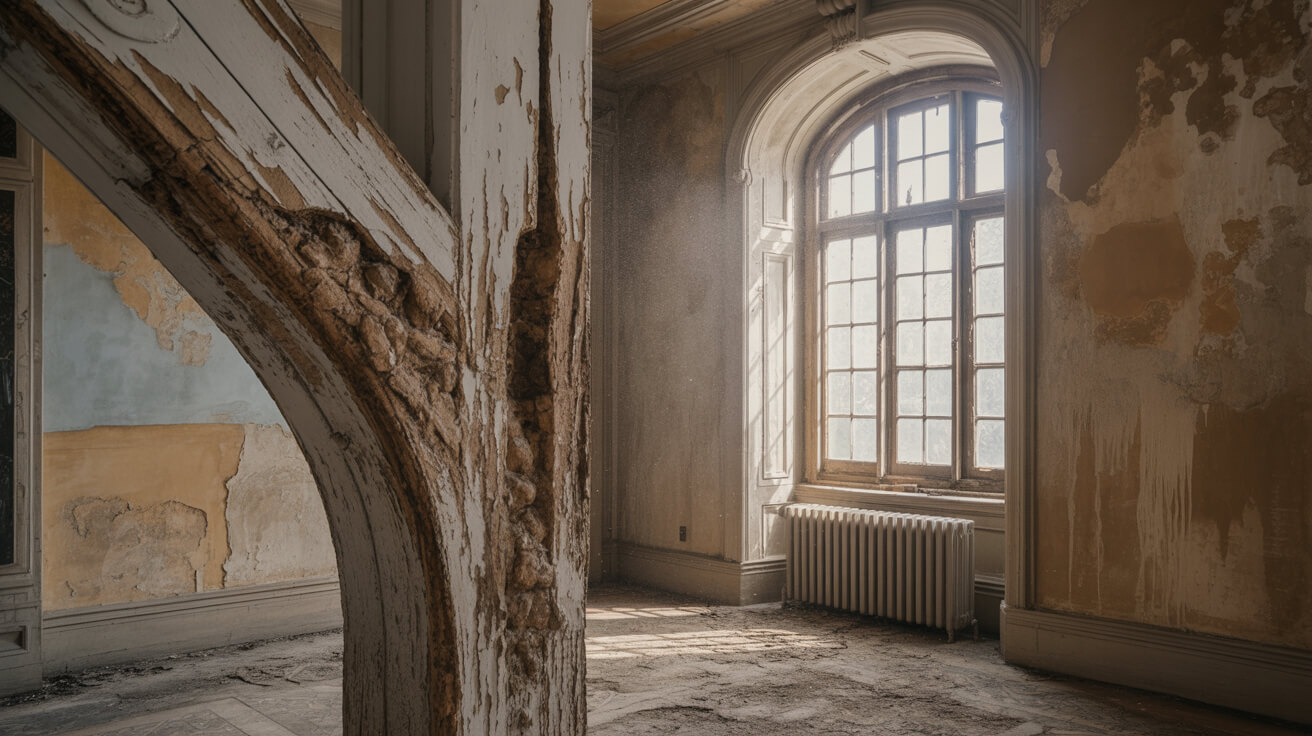
The Environmental Protection Act 1990 (EPA 1990) sets out statutory measures to reduce environmental pollution and safeguard public health by controlling the discharge and disposal of contaminants across industrial, commercial, and residential sectors. Within the context of damp proofing, particularly in heritage properties and listed structures, this act underpins the selection and application of treatment methods that are both environmentally sound and sensitive to the conservation of historic fabric. Its guidelines ensure that remedial practices not only prevent further moisture ingress but also comply with modern environmental standards.
Heritage buildings present unique challenges for damp proofing due to their atypical construction materials and historical significance. The integration of EPA 1990 with building conservation regulations has improved treatment protocols by promoting sustainable practices that protect both the building and the surrounding environment. As such, the act plays an essential role in guiding your decision-making process to achieve optimal compliance and long-term preservation outcomes.
Overview / Context
EPA 1990 was enacted to address the pressing need for comprehensive environmental regulation in response to increasing industrial pollution and waste management challenges. The act provides binding limits on the emission of pollutants, mandates improved waste disposal procedures, and requires detailed environmental impact assessments for many industrial processes.
In the field of construction and building maintenance, the act has a profound impact on damp proofing, particularly for heritage properties and listed buildings. These structures, often characterised by traditional materials and methods, are highly susceptible to moisture-related decay. Ensuring that restorative treatments adhere to EPA 1990 is critical, as it ensures that the chemicals and techniques employed meet evolving environmental and safety standards. Moreover, the act influences a range of related industry standards, such as BS6576 and BS8102, which guide diagnostic and treatment practices.
The regulatory framework provided by EPA 1990 creates an ecosystem where environmental protection and conservation must co-exist. Due to its focus on reducing harmful environmental impacts, the act indirectly shapes practice in sectors with heritage characteristics, ensuring that preservation efforts incorporate sustainable, reversible interventions. This balancing of modern environmental imperatives with the conservative approaches necessary for heritage protection is at the core of current damp proofing methodologies.
History
EPA 1990 emerged at a time when growing public concern over industrial pollution necessitated a unified legislative approach. Before its enactment, environmental regulations were fragmented and sporadically applied. The act consolidated various control measures, providing a cohesive structure for managing hazardous substances, industrial emissions, and waste disposal practices.
Historically, damp proofing in heritage buildings relied on traditional, often rudimentary, methods that lacked the precision and environmental consideration seen today. As scientific understanding of moisture dynamics advanced, it became clear that these approaches were inadequate for both performance and regulatory compliance. The introduction of EPA 1990 spurred the evolution of damp proofing practices. Industry standards evolved to integrate environmental safety with technical efficacy, leading to the development of methods that better preserve historical materials while effectively mitigating damp issues.
The evolution of both legislation and damp proofing practices has been marked by continuous refinement. With subsequent updates to building regulations and environmental policies, current practice now reflects a holistic approach that encompasses advanced diagnostic technologies, sustainable materials, and robust monitoring systems. This historical progression underscores the act’s lasting impact on the construction and conservation sectors, driving innovation that balances heritage preservation with stringent environmental requirements.
Concept / Description
The Environmental Protection Act 1990 establishes a structured legal framework with the aim of reducing environmental pollution and regulating hazardous waste. Its primary provisions include restrictions on the discharge of harmful substances, responsibilities for waste management, and the enforcement of environmental impact assessments. In practice, EPA 1990 informs how industries handle chemicals and pollutants, necessitating environmentally benign treatment processes across a range of sectors.
Within the damp proofing domain, particularly for heritage and listed buildings, the act underlies many technical and operational decisions. Damp proofing is a process that involves identifying, preventing, and remedially treating moisture ingress within building structures. For heritage properties, the challenge is to control damp without compromising the integrity of historical materials. EPA 1990 directs practitioners towards approaches that minimise environmental harm – for example, by favouring low-toxicity chemicals or reversible physical barriers over methods that might permanently alter the building fabric.
The act integrates with established technical standards—such as BS6576 and BS8102—ensuring that treatment methods not only address immediate moisture challenges but also meet rigorous environmental and safety guidelines. This synthesis of environmental law and technical practice is critical in heritage settings where the dual objectives of conservation and modern compliance must be met harmoniously.
Functionality / Purpose / Applications
EPA 1990 operates as an overarching regulatory framework intended to protect the environment by mitigating pollution and ensuring proper waste management. Its functionalities extend into various arenas, including public health, industrial process regulation, and building maintenance. Within your sector, the act informs the selection of materials and methods used in damp proofing applications following repair and restoration.
For heritage properties and listed buildings, EPA 1990 serves several specific purposes:
- Environmental safeguarding: It mandates the reduction of hazardous emissions and encourages the use of eco-friendly treatment compounds. This ensures that restorative methods do not cause further ecological degradation.
- Compliance assurance: It helps map remedial practices against a backdrop of related standards such as BS6576 and PAS2035. These regulatory benchmarks assure that treatments are not only effective but also environmentally sustainable.
- Risk minimization: By enforcing stringent controls on chemical usage, EPA 1990 protects public health and minimises risks associated with inappropriate remedial interventions. In heritage settings, this is essential, as improper treatment can lead to accelerated deterioration of historic materials.
Applications of EPA 1990 in damp proofing are evident in the staged processes that involve diagnostics, treatment selection, and post-treatment monitoring. For example, prior to intervention, a comprehensive environmental impact assessment (EIA) may be conducted to evaluate the potential repercussions of treatment chemicals. This data informs the final treatment plan, ensuring that the chosen methods are compliant, effective, and sustainable. Such rigorous application of EPA 1990 principles has led to the development of specialised protocols tailored for heritage conservation—protocols that help you maintain both the structural integrity and historical value of the property.
Classifications / Types / Variants
Heritage structures present a variety of damp issues, each of which may require distinct treatment approaches. The classifications of damp relevant to these settings include:
1. Rising Damp:
- Caused by capillary action where water ascends through porous building materials.
- Traditionally prevalent in historic, solid-wall buildings.
2. Penetrating Damp:
- Occurs when water infiltrates through external walls or defects in the building envelope.
- Often a result of deteriorated render or cracked stone.
3. Condensation Damp:
- Resulting from high indoor humidity causing moisture to condense on cold surfaces.
- Common in poorly ventilated heritage interiors.
4. Hygroscopic Damp:
- Associated with the absorption of moisture by salts embedded in masonry, leading to efflorescence and deterioration.
5. Special Considerations:
- In some cases, hybrid phenomena such as interstitial condensation may occur where moisture is trapped within wall assemblies.
Treatment methods are correspondingly varied, with remedial approaches designed to suit specific damp types. The methods encompass:
- Chemical Damp Proof Courses (DPCs):
- Involve injecting low-toxicity chemicals that form a barrier against moisture.
- Physical Barrier Systems:
- Utilise tanking slurry or other impermeable materials to block water ingress.
- Breathable Treatments:
- Include the application of reversible, eco-friendly plasters that allow moisture to escape while preventing damp accumulation.
By classifying the types of damp and associated treatments, conservation professionals can tailor their approaches to the specific needs of heritage structures, ensuring that interventions preserve both structural integrity and historic authenticity.
Systems / Tools / Methodologies
Effective damp proofing in heritage and listed buildings relies on a range of sophisticated tools and methodologies to ensure that interventions meet both environmental and conservation standards. Key components include:
Diagnostic Tools
- Moisture Metres and Hygrometers:
– Used to quantitatively assess moisture levels across various building materials.
– Provide baseline data essential for determining the severity of damp issues.
- Thermal Imaging Cameras:
– Capture temperature differentials in walls, identifying areas of latent moisture accumulation.
– Useful for detecting hidden damp pockets where conventional inspection might fail.
- Salt Test Kits:
– Enable the detection of hygroscopic salts, which are indicators of rising or penetrating damp.
- Surveyor Diagnostic Reports:
– Combine Visual Inspections with instrumental measurements to provide a comprehensive assessment of damp conditions.
Methodologies and Monitoring Systems
- Environmental Impact Assessments (EIA):
– Conducted to evaluate the potential environmental consequences of treatment methods, ensuring that compliant practices are employed.
- Compliance Protocols:
– Standardised procedures set forth in BS6576, BS8102, and PAS2035 that outline best practices for damp proofing.
– Ensure that interventions meet the regulatory requirements established by EPA 1990.
- Post-Treatment Monitoring:
– Involves the use of real-time moisture sensors and periodic inspections to assess the long-term effectiveness of interventions.
- Technical Surveys:
– Detailed assessments performed by heritage surveyors that incorporate both traditional inspection techniques and modern diagnostic tools to guide remediation.
These systems and tools work in concert to provide a clear and measurable framework for both diagnosing and treating damp issues, ensuring that every step of the process is grounded in empirical data and regulatory compliance.
Stakeholders / Entities Involved
The implementation of EPA 1990 in the context of damp proofing for heritage properties involves multiple stakeholders, each playing a critical role in ensuring comprehensive project success. The primary entities and their roles include:
Property Owners and Managers
- Homeowners, Landlords, and Facility Directors:
– Bear the responsibility for initiating restoration projects. – Must balance cost considerations with long-term preservation and compliance with environmental regulations.
Conservation Professionals
- Heritage Surveyors and Conservation Officers:
– Provide expert assessments of the building’s condition. – Ensure that remedial measures are in line with both regulatory requirements and best practices in heritage conservation.
- Restoration Specialists and Damp Proofing Contractors:
– Execute technical interventions using specialised techniques and materials approved for heritage applications. – Deliver sustainable treatments that align with EPA 1990 guidelines and conservation standards.
Regulatory Bodies
- Local Planning Authorities and Heritage Organisations:
– Oversee compliance with listed building consents and conservation guidelines. – Monitor adherence to environmental standards.
- Environmental Agencies:
– Enforce EPA 1990 provisions and outline penalties for non-compliance. – Provide frameworks for waste management and pollutant control in remediation projects.
Technical and Advisory Entities
- Industry Consultants and Technical Experts:
– Advise on the use of diagnostic tools, treatment methods, and material selection. – Facilitate the incorporation of best practices and emerging technologies into heritage restoration efforts.
Coordinated collaboration between these stakeholders is essential to navigate the technical, regulatory, and ethical complexities inherent in preserving historic structures while meeting modern environmental mandates.
Legal / Regulatory / Ethical Considerations
The Environmental Protection Act 1990 defines the legal framework that governs environmental practices in the United Kingdom, and its application in damp proofing projects for heritage properties is governed by a series of interrelated legal and ethical provisions.
Legal Framework
- Core Provisions of EPA 1990:
– Establishes limits on the discharge of pollutants and mandates responsible waste management practices. – Specifies the requirements for proper handling, storage, and disposal of hazardous substances used in remedial treatments.
- Building and Conservation Regulations:
– EPA 1990 functions alongside directives such as BS6576 and BS8102, in addition to PAS2035, which outline specific requirements for damp proofing in the built environment. – Listed building consent stipulations require that any restoration, including damp remedial works, preserve the historical and cultural significance of the structure.
- Statutory Enforcement:
– Regulatory bodies are empowered to monitor compliance, with legal sanctions for non-adherence.
– Mechanisms such as Environmental Impact Assessments (EIA) ensure that interventions do not contravene ecological standards set forth by the act.
Regulatory and Ethical Implications
- Balancing Environmental and Heritage Interests:
– Ethical restoration mandates that interventions be reversible to preserve original materials and architectural authenticity. – The selection of treatment methods is guided by the principle of sustainability, ensuring that remediation does not introduce new environmental risks.
- Transparency and Accountability:
– Detailed documentation through surveyor reports and compliance certificates is essential to verify adherence to EPA 1990 standards. – Stakeholders must consider both the immediate and long-term impacts of remedial works on public health and historical integrity.
- Sustainable Practices:
– The act encourages the adoption of treatments that minimise environmental disruption, thus supporting broader sustainability goals. – Ethical considerations extend to the responsible use of chemicals and the promotion of non-invasive, heritage-sensitive methods.
Adhering to these legal, regulatory, and ethical principles is crucial, ensuring that damp proofing projects in heritage settings not only address moisture problems but also uphold the broader commitments of environmental stewardship and cultural preservation.
Performance Metrics / Data / Measurements
Effective performance evaluation is a cornerstone of compliant and sustainable damp proofing practices. The measurement of outcomes and continuous data collection ensure that interventions meet both technical standards and environmental regulations.
Key Performance Metrics
- Moisture Level Reduction:
– Quantitative measurements using moisture metres before and after treatment to assess efficacy. – Improvement in readings is a primary indicator of successful damp remediation.
- Treatment Longevity:
– Monitoring the durability of the applied treatments over time. – Periodic evaluations ensure that remedial measures continue to perform as expected.
- Regulatory Compliance:
– Documentation of adherence to established standards (BS6576, BS8102, PAS2035) as evidenced by surveyor reports. – Compliance metrics include environmental performance indicators and safety certifications.
- Economic Impact:
– Analysis of treatment costs versus long-term savings in maintenance and property preservation. – Evaluation of investment in sustainable practices that enhance property value over the long term.
Data Collection and Monitoring Techniques
- Use of Digital Sensors:
– Integration of real-time moisture sensors and wireless Hygrometers provides continuous monitoring and early detection of recurring damp issues.
- Surveyor Reports:
– Comprehensive documentation detailing pre-treatment conditions, interventions, and post-treatment performance.
- Periodic Inspections:
– Scheduled assessments ensure treatment sustainability and help refine future remediation strategies.
- Environmental Data:
– Collection of environmental impact data related to pollutant levels and chemical residues helps evaluate the broader ecological benefits of compliant treatments.
These performance metrics form a vital feedback loop, enabling continuous adjustment and optimization of damp proofing strategies in compliance with EPA 1990 issues and heritage conservation guidelines.
Challenges / Barriers / Limitations
Despite significant advancements, several challenges and barriers continue to affect the application of EPA 1990 in damp proofing, particularly in heritage properties and listed buildings.
Technical Challenges
- Diagnostic Complexity:
– Historic structures often exhibit non-standard construction methods and material deterioration that complicate moisture assessments. – Inconsistent material properties require specialised equipment and adaptative methodologies.
- Material Compatibility:
– Modern damp proofing treatments may be incompatible with traditional building materials, risking damage to the original fabric. – The need for reversible and sustainable solutions necessitates meticulous material selection.
- Integration with Legacy Structures:
– Heritage buildings can exhibit unique moisture dynamics, necessitating bespoke diagnostic measures and treatment protocols.
Regulatory and Economic Barriers
- Consent and Compliance:
– Navigating the regulatory landscape, especially attaining listed building consent, may delay restoration.
– The complexity of interrelated standards (EPA 1990, BS6576, BS8102, PAS2035) increases administrative burdens.
- Financial Constraints:
– The higher cost of heritage-sensitive, eco-friendly damp proofing treatments often represents a financial barrier. – Budget limitations can influence the choice of treatment, potentially compromising on both sustainability and preservation.
- Regulatory Uncertainty:
– Changes in environmental and conservation policies can create uncertainty over long-term compliance strategies. – The evolving nature of heritage legislation may require periodic reassessments of treatment methodologies.
Socio-Cultural and Ethical Considerations
- Balancing Preservation with Modern Standards:
– Ethical dilemmas arise in striving to preserve historic fabric while ensuring that remedial measures conform to modern safety and environmental standards. – Preservationists and regulatory bodies may differ on acceptable alterations to historical structures.
- Stakeholder Divergence:
– Different stakeholders, from property owners to conservation officers, may have divergent priorities, complicating decision-making processes. – Achieving consensus on the most appropriate treatment approach can be challenging.
Addressing these barriers requires an integrated approach that combines technical innovation, robust regulatory knowledge, and active stakeholder collaboration. While challenges remain, continuous advancements in diagnostic technologies and sustainable treatment methods contribute substantially to overcoming these hurdles.
Impact / Influence / Legacy
EPA 1990 has significantly influenced the field of environmental management and damp proofing, particularly within the sensitive context of heritage properties and listed buildings.
Industry Transformation
- Evolution of Remedial Practices:
– The act has catalysed a shift towards the adoption of more sustainable, environmentally responsible treatment methods.
– Innovations such as reversible chemical treatments and physical barrier systems have emerged, prioritising both environmental and heritage conservation.
- Integration of Safety and Sustainability:
– Compliance with EPA 1990 has instilled rigorous standards for the use of chemicals and waste management practices.
– As a result, modern damp proofing techniques are designed to minimise environmental impact while preserving historical integrity.
Public Health and Economic Value
- Enhanced Public Health:
– By controlling the discharge of hazardous substances, EPA 1990 indirectly improves indoor air quality in damp-affected heritage buildings, contributing to better public health outcomes.
- Economic Benefits in Heritage Preservation:
– Effective damp proofing underlined by rigorous environmental standards helps maintain property values and reduce long-term maintenance costs. – The long-term preservation of heritage assets supports cultural continuity and economic stability in communities with valuable historic built environments.
Legacy in Regulatory and Conservation Discourse
- Establishment of Best Practices:
– EPA 1990 has set a precedent for subsequent environmental and industrial regulations, embedding sustainability into standard practice. – Its influence extends across multiple sectors, reinforcing the principles of responsible environmental stewardship.
- Ongoing Regulatory Evolution:
– The act continues to inform the development of supplementary regulations and conservation guidelines, ensuring that best practices evolve to meet new environmental challenges.
- Cultural and Academic Impact:
– Its legacy persists in public and professional discussions, shaping contemporary debates on environmental protection, heritage conservation, and sustainable development.
The cumulative influence of EPA 1990 underscores its pivotal role in guiding both current and future practices. The act’s integrated approach to environmental and heritage management has provided a robust foundation for progressive, sustainable solutions in damp proofing and beyond.
Future directions, cultural relevance, and design discourse
Emerging trends suggest that damp proofing practices in heritage properties will increasingly incorporate advanced technologies and sustainable methodologies, as regulatory frameworks continue to evolve in response to contemporary environmental challenges.
Technological Advancements
- Non-Invasive Diagnostics:
– Future developments in thermal imaging, real-time moisture sensors, and digital modelling are expected to refine diagnostic accuracy.
– Integration of smart sensors and IoT devices may provide continuous monitoring, enabling proactive maintenance.
- Sustainable Materials:
– There is growing interest in renewable, low-impact materials that can provide effective damp proofing while preserving the architectural integrity of heritage buildings. – Research into bio-based treatment compounds that minimise ecological footprints is accelerating, promising treatments that are both reversible and environmentally benign.
- Data-Driven Approaches:
– The adoption of comprehensive digital platforms that integrate survey data, environmental metrics, and predictive analytics will facilitate more effective treatment planning and monitoring. – Enhanced data collection and performance metric analysis will enable more efficient long-term maintenance strategies and regulatory adherence.
Regulatory and Cultural Evolution
- Policy Adaptation:
– Anticipated updates to EPA 1990 and associated environmental regulations will focus on increasing sustainability and improving public health outcomes. – Future policy changes are likely to reinforce the use of non-toxic, reversible damp proofing methods in heritage conservation.
- Heritage Aesthetics and Preservation:
– A growing cultural emphasis on preserving historical authenticity is influencing treatment choices, prioritising methods that maintain the original fabric. – Conservation philosophies may evolve to incorporate modern diagnostic and sustainable practices without compromising heritage integrity.
- Interdisciplinary Design Discourse:
– The convergence of technology, architecture, and heritage conservation is fostering an interdisciplinary dialogue about the future of restoration. – Design discourse is increasingly incorporating elements from digital architecture and systems engineering to propose innovative, adaptive solutions for damp management.
- Cultural Critique and Public Engagement:
– Broader societal discussions about the importance of maintaining historical and cultural continuity within an environmentally conscious framework are emerging. – These debates are likely to further refine ethical restoration guidelines and influence the strategic planning of heritage conservation projects.
As technology and regulatory practices advance, the integration of EPA 1990 principles into heritage damp proofing will become increasingly sophisticated. The evolving landscape promises enhanced methods and tools, greater stakeholder collaboration, and continuous refinement of best practices. In this dynamic environment, the balance between environmental protection and heritage preservation will continue to shape the future of sustainable restoration and cultural conservation.
