

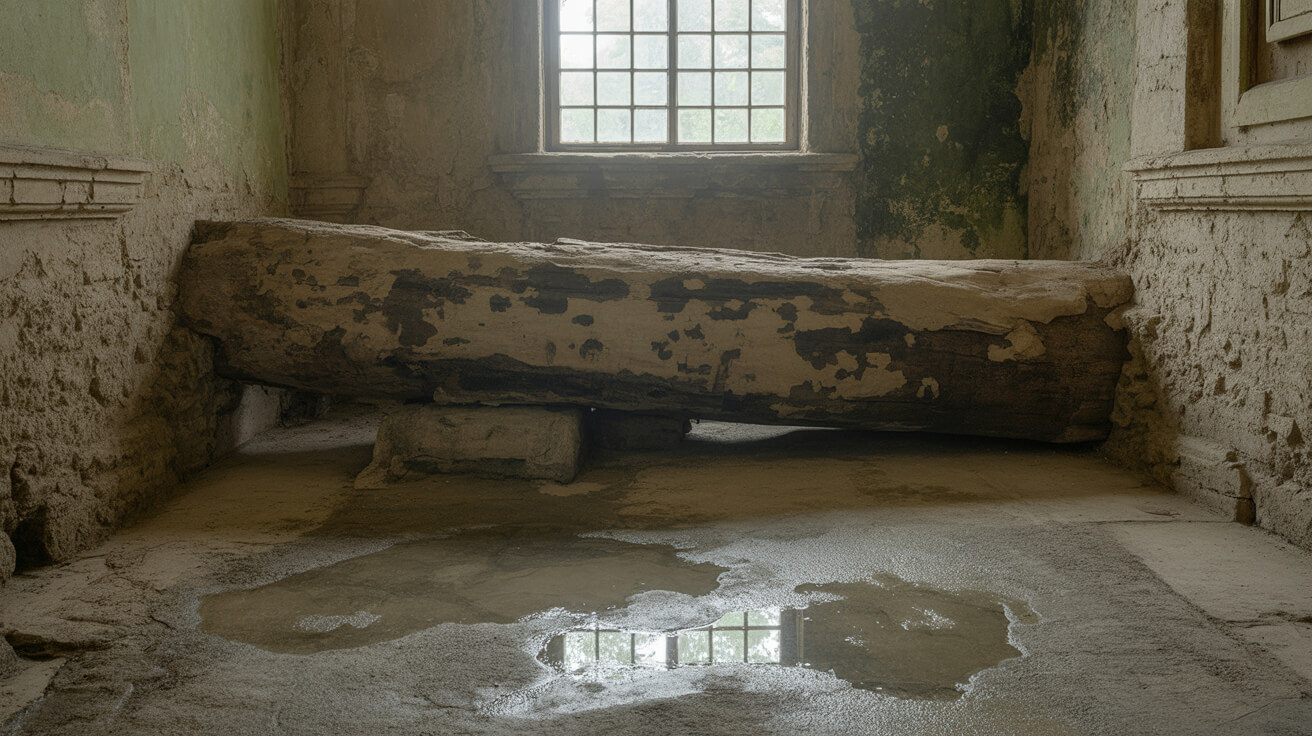
basements in historic buildings are characterised by their distinct construction methods and environmental exposures, which render them susceptible to various forms of damp. The preservation of these spaces is critical both for maintaining the structural integrity of the property and for conserving cultural heritage. Modern damp proofing seeks to reconcile historically appropriate methods with contemporary technological advancements, ensuring effective moisture management without compromising the building’s authenticity.
Overview and Context
Basements, as integral components of heritage structures, play a significant role in the overall functioning and aesthetic of historic properties. These spaces, set below ground level, are often constructed using traditional techniques and materials that require careful maintenance. The phenomenon of damp in basements has multifaceted causes ranging from natural soil moisture to the deterioration of original building methods.
In heritage and listed properties, damp proofing involves a balance between intervention and conservation. The need to manage moisture is heightened by factors such as high groundwater levels, capillary action, and thermal bridging. These issues lead to the manifestation of rising damp, condensation issues, and even penetrating moisture, which can result in structural damage and material decay over time. The overarching challenge lies in applying corrective treatments that are not only effective but also sympathetic to the historic fabric of the building.
Heritage properties are typically subject to conservation guidelines designed to minimise invasive alterations. As such, the selection of damp proofing treatments must emphasise non-disruptive methods that safeguard original architectural features. Environmental factors, including seasonal fluctuations and local climate characteristics, further complicate moisture management strategies for basements in heritage structures.
History
Historically, damp proofing in basements has evolved through a gradual process of experimentation and adaptation. Early construction methods in heritage properties did not incorporate dedicated moisture barriers, relying instead on natural building materials such as lime mortar and unlined stone walls. As properties aged, signs of moisture accumulation—manifested as salt staining, efflorescence, and damp patches—began to appear, prompting the development of preventive measures.
During the 19th century, with the advent of industrial advancements, builders started to implement rudimentary damp proof courses (DPCs) using materials such as bitumen and mortar mixes. However, these early interventions were often unsuited to the complexities of historic construction, as they sometimes interfered with the original building methods and the natural breathability of the materials.
The 20th century witnessed significant advancements in both the scientific understanding of moisture dynamics and the regulatory framework governing damp proofing. Standards such as BS6576 and BS8102 emerged, providing clear guidelines for assessing and treating damp in buildings. These standards were developed to better address the unique challenges posed by heritage structures, ensuring that treatments could be applied without compromising historical accuracy.
Contemporary history in this field is defined by the integration of digital diagnostic tools, non-invasive moisture measurement, and advanced materials science. Today, heritage damp proofing practices are characterised by a hybrid approach—melding traditional techniques with modern technology—and a strong emphasis on compliance with heritage conservation guidelines. This evolution reflects the growing recognition of both the technical aspects of damp control and the cultural significance inherent in preserving historic basements.
Concept and Description
Basement damp proofing in heritage properties is a specialised field that involves the application of tailored methods to control moisture ingress and accumulation in below-ground spaces. The concept is rooted in understanding the physical and chemical processes through which water migrates into a building. Key mechanisms include:
Moisture Migration Mechanisms
- Capillary Action: This process describes the movement of water through small pores in building materials. In basements constructed with porous stone or brick, moisture can be drawn upward from the ground, leading to gradual deterioration.
- Hydrostatic Pressure: When groundwater levels are high, the pressure exerted against a building’s foundation can force water into the structure. This is particularly significant in older buildings where drainage systems may be inadequate.
- Thermal Bridging and Condensation: Differences in temperature between the interior and exterior surfaces can lead to condensation, particularly in basements where ventilation is limited. This contributes to the buildup of moisture on cold surfaces.
Treatment Methods
damp proofing treatments are designed to interrupt these moisture migration processes. Common methods include:
- Chemical Damp Proof Courses (DPCs): Involve the injection of chemical barriers into walls to inhibit the upward movement of water.
- Physical DPCs: Employ materials such as membranes or slurries that form a continuous barrier against moisture.
- Tanking Techniques: Applied to external walls, tanking creates a waterproof layer that prevents moisture penetration while maintaining the structure’s heritage appearance.
- Breathable Plaster and Repair Systems: These methods allow walls to expel moisture, minimising the risk of trapping water within the structure.
The selection of a treatment method depends on the specific damp problem, the building’s construction, and conservation requirements. Treatments must balance effectiveness with the need to preserve original materials, ensuring that interventions remain reversible where possible.
Functionality, Purpose, and Applications
Basement damp proofing fulfils both functional and preservational roles in heritage properties. Its primary purpose is to protect the building from the detrimental effects of moisture, thereby preserving structural stability and historical authenticity.
Functional Roles
- Structural Protection: By preventing moisture-induced decay, damp proofing helps maintain the integrity of the foundation and walls, reducing risks of collapse or significant damage.
- Health and Safety: Moist environments can foster the growth of mould and other pathogens, posing health risks to occupants. Effective damp proofing contributes to a healthier indoor climate.
- Energy Efficiency: Damp proofing can also play a role in improving the thermal performance of a building. By controlling moisture, it helps maintain consistent indoor temperatures and reduces energy loss through poorly insulated walls.
Purpose in Heritage Context
In heritage properties, the objectives of damp proofing extend beyond basic functionality. They include:
- Preservation of Historic Fabric: Treatment methods must be carefully chosen to avoid altering or damaging original architectural features. The goal is to mitigate damp without compromising the building’s historical value.
- Compliance with Conservation Standards: Heritage properties are subject to stringent guidelines that govern the type and extent of permitted interventions. Effective damp proofing must adhere to these standards while delivering practical results.
- Legacy and Continuity: By ensuring that damp does not erode the historical and cultural significance of a building, damp proofing contributes to the ongoing preservation of architectural heritage for future generations.
Applications
The practical applications of basement damp proofing in heritage properties are evident in both new treatment interventions and ongoing maintenance practices. Some examples include:
- Retrofitting Projects: In older buildings, damp proofing methods are often integrated into restoration projects to address longstanding moisture issues.
- Preventative Maintenance: Regular monitoring and minor interventions help prevent the recurrence of damp, ensuring that heritage buildings remain in good condition.
- Custom Treatment Plans: Based on diagnostic assessments, tailored damp proofing strategies are developed to address the specific characteristics and needs of individual basements.
Classifications, Types, and Variants
A nuanced understanding of damp in basement environments requires the categorization of moisture-related issues. This classification informs treatment choice and helps in designing a systematic intervention strategy.
Types of Damp
- Rising Damp: Occurs when water is drawn upward through porous building materials by capillary action. This is common in older structures where original constructions did not incorporate effective damp proof courses.
- Penetrating Damp: Results from water penetrating through defects in the building envelope. It is often attributable to flaws in external wall finishes or insufficient weatherproofing.
- Condensation Damp: Arises from the accumulation of water vapour in poorly ventilated spaces. In basements, this is frequently observed where the internal surface temperature is significantly lower than the ambient air.
- Hydrostatic Damp: Caused by high groundwater levels and the pressure exerted by water on the building’s foundation, often necessitating comprehensive drainage and waterproofing measures.
Variants of Treatment Methods
- Chemical DPCs vs. Physical Barriers: Chemical solutions involve liquid injections that form a moisture-resistant barrier, while physical approaches use prefabricated materials to block moisture paths.
- Tanking vs. Membrane Systems: Tanking is typically employed on the external face of walls, whereas membrane systems may be used internally, each with different implications for heritage conservation.
- Breathable vs. Impermeable Systems: Breathable treatments allow building materials to release moisture, reducing the risk of internal condensation, while impermeable systems provide a robust barrier but risk trapping moisture.
The classification and selection of treatment variants must be adapted to the specific moisture challenges present in a basement, taking into account the historic construction methods and materials used in the building.
Systems, Tools, and Methodologies
The successful management of damp in heritage basements is contingent on the use of specialised systems, diagnostic tools, and established methodologies. Advances in technology have provided practitioners with a suite of instruments that enhance the precision and accuracy of damp assessments.
Diagnostic Tools
- Moisture Metres: Essential for quantifying the moisture content within building materials. These devices provide a numerical value that helps gauge the severity of damp.
- Thermal Imaging Cameras: Detect variations in temperature that may indicate areas of moisture accumulation, particularly useful for identifying thermal bridging.
- Salt Test Kits: Used to evaluate the presence of salts on wall surfaces, which is an indicator of rising or penetrating damp.
- Hygrometers: Measure relative humidity levels within a basement, offering insights into condensation risks.
Methodologies
- Non-Invasive Assessment: Modern diagnostic protocols emphasise non-destructive testing methods that preserve the integrity of heritage materials. Techniques such as infrared thermography and air movement mapping are widely used.
- Treatment Implementation: Methods vary based on the underlying type of damp. Chemical injections, physical barrier installations, and tanking systems are deployed based on a detailed analysis of the moisture problem.
- Continuous Monitoring: Advanced sensor networks and data loggers allow for real-time tracking of moisture levels post-treatment, ensuring that interventions remain effective over extended periods.
Tables of Regulatory Standards and Tools
| Standard/Tool | Purpose | Applicability |
|---|---|---|
| BS6576 | Diagnostic criteria for damp proofing | Heritage properties requiring precise evaluations |
| BS8102 | Guidelines for waterproofing below ground | Basement applications and external tanking systems |
| PAS2035 | Retrofit specification for historic building treatments | Conservation projects requiring minimal impact |
| Moisture Metre | Quantitative moisture measurement | All diagnostic phases for precise data collection |
| Thermal Imaging | Identifies thermal anomalies | Detection of hidden damp and insulation issues |
The integration of these tools and methodologies provides a comprehensive framework for diagnosing, treating, and monitoring baseline moisture issues in heritage basements.
Stakeholders and Entities Involved
Basement damp proofing in heritage properties involves a collaboration among diverse stakeholders, each contributing specialised expertise to ensure effective interventions and adherence to conservation guidelines.
Key Stakeholders
- Property Owners and Managers: Responsible for commissioning and overseeing damp proofing interventions. They must balance the financial and aesthetic considerations of treatment with the long-term preservation of the property.
- Conservation Professionals and Surveyors: Experts in the field conduct detailed assessments and recommend treatment strategies that align with both technical requirements and heritage conservation standards. Their evaluations are critical in determining the appropriate methods for damp proofing.
- Regulatory Agencies: Bodies such as local conservation authorities and heritage councils enforce building regulations and oversee compliance with standards like BS6576 and BS8102. They play a crucial role in approving any intervention in listed buildings.
- Specialist Contractors: Technical experts skilled in the practical aspects of damp proofing implement the chosen treatment methods. Their work ensures that interventions are executed accurately and in accordance with regulatory guidelines.
- Research Institutions: These organisations advance the field through experimental validation and the development of new technologies, thereby contributing to the ongoing improvement of damp proofing methodologies in heritage contexts.
Collaboration among these stakeholders facilitates a robust approach to damp proofing that not only addresses immediate moisture issues but also preserves the long-term integrity and heritage value of the property.
Legal, Regulatory, and Ethical Considerations
Heritage basements are subject to a complex framework of legal and regulatory standards designed to safeguard historical integrity while ensuring public safety. These standards, which include technical guidelines and conservation mandates, govern the methods employed in damp proofing.
Regulatory Framework
- BS6576 and BS8102: These British Standards establish criteria for the diagnosis and treatment of damp, ensuring that interventions are both effective and compatible with the historical fabric of heritage properties.
- PAS2035: This specification outlines best practices for retrofitting heritage buildings, guiding the selection of treatment methods that minimise alterations to original structures.
- Building Regulations (Part C and F): These sections address moisture control and ventilation requirements, serving as a legal basis for ensuring compliance in the damp proofing process.
- Listed Building Consent: Heritage properties classified as listed require special permissions for modifications. Regulatory bodies ensure that any treatment is undertaken with minimal disruption to the building’s character.
Ethical Considerations
Ethical debates in damp proofing often centre on the tension between effective moisture mitigation and the preservation of historical authenticity. Practitioners must consider the impact of interventions on the cultural significance of the structure, striving to maintain as much of the original material and design as possible while addressing urgent damp issues.
Compliance and Enforcement
The interplay of legal, regulatory, and ethical considerations necessitates rigorous documentation and continuous compliance monitoring. Regular inspections, certifications, and audits are critical components in the enforcement of standards designed to protect heritage property. These measures ensure that applied treatments do not detract from the historic value or integrity of the building.
Performance Metrics, Data, and Measurements
The evaluation of basement damp proofing interventions relies on a systematic approach to data collection and analysis. Performance metrics are employed throughout the diagnostic and post-treatment phases to ensure that moisture control strategies meet established standards and deliver durable results.
Key Performance Metrics
- Moisture Content: Measured using moisture metres, this metric provides quantitative data on the water content within building materials, serving as a baseline for treatment efficacy.
- Thermal Differential: Thermal imaging helps assess temperature variations across surfaces, indicating areas of potential moisture accumulation.
- Salt Accumulation: Salt test kits quantify the level of efflorescence, which is a direct indicator of damp problems such as rising damp.
- Humidity Levels: Hygrometers measure the relative humidity in basement environments, providing insight into the risk of condensation and mould growth.
Monitoring Techniques
- Continuous Sensor Networks: Modern damp proofing solutions often incorporate wireless sensors and data loggers to continuously monitor moisture levels. This real-time data aids in early detection of treatment failures or environmental changes.
- Periodic Inspections: Scheduled assessments, conducted by conservation professionals, verify the long-term performance of damp proofing interventions. These checks may involve both non-invasive and direct assessment methods.
Data gathered from these metrics is used to refine treatment methodologies and to ensure the sustainability of interventions over the long term. The integration of continuous monitoring technology has become increasingly important in the management of heritage properties, where early detection of issues can prevent significant deterioration.
Challenges, Barriers, and Limitations
Implementing damp proofing in basements of heritage properties presents unique challenges that stem from both technical and regulatory factors. These can be broadly categorised into the following areas:
Operational and Technical Barriers
- Complex Structural Geometries: Heritage basements often feature irregular layouts and materials that complicate the uniform application of modern damp proofing techniques.
- Limited Access: In many historic buildings, basements are partially obscured or difficult to access, making thorough diagnostics and maintenance challenging.
- Material Incompatibility: Traditional building materials, such as lime-based mortars and natural stone, may react unpredictably with contemporary damp proofing substances. This incompatibility necessitates careful selection of treatment systems to prevent negative interactions.
Regulatory and Conservation Challenges
- Strict Conservation Guidelines: Heritage properties are subject to stringent regulations that limit the type and extent of permissible interventions. Compliance with listed building consent and heritage conservation guidelines often requires bespoke solutions that can be both technically and financially demanding.
- Balancing Modern Standards with Historical Integrity: There is an inherent tension between the application of effective damp proofing techniques and the need to preserve the building’s original design and materials. This balancing act often requires compromise, leading to solutions that may not fully address the moisture challenge.
- Cost and Complexity: The financial and logistical demands associated with heritage damp proofing can be significant. Owners may face restrictions in budget allocation and may have to compromise on the level of intervention, especially when specialised materials and technologies are required.
Social and Philosophical Considerations
- Cultural Value versus Modern Intervention: Ethical debates persist over the extent to which historic structures should be altered to accommodate modern damp proofing techniques. Preservation purists often advocate for minimal intervention to maintain authenticity, while others emphasise the need for effective moisture control to safeguard the property.
- Risk of Over-Innovation: Introducing cutting-edge technology into heritage environments carries the risk of unintended consequences. Over-reliance on innovative solutions without adequate testing on historic materials may lead to further degradation or incompatibility issues.
The challenges associated with basement damp proofing in heritage contexts require a multidisciplinary approach that incorporates technical expertise, regulatory compliance, and ethical sensitivity. Overcoming these barriers is essential to ensure both the preservation of historical integrity and the effective management of moisture within these unique environments.
Impact, Influence, and Legacy
The outcomes of effective basement damp proofing extend beyond immediate moisture control, affecting the structural longevity and cultural significance of heritage properties. The impact of these interventions is multifaceted, encompassing both practical and symbolic dimensions.
Structural and Functional Impact
- Enhanced Structural Integrity: The primary benefit of successful damp proofing is the prolonged stability of the building. By mitigating moisture intrusion, treatment measures halt the progression of deterioration, preserving load-bearing elements and preventing issues such as rot, corrosion, and decay.
- Improved Operational Efficiency: With reduced dampness, indoor environments become more comfortable and energy-efficient. Effective damp control minimises condensation, lowering the risk of mould growth and associated health hazards.
- Financial Implications: Preventative damp proofing can safeguard property value by mitigating the extensive repair costs associated with moisture damage. Well-maintained heritage properties with effective damp management are more likely to attract favourable mortgage terms and insurance conditions.
Cultural and Legacy Contributions
- Preservation of Heritage: Damp proofing plays a crucial role in conserving the architectural and historical value of heritage properties. By preventing moisture-related decay, these interventions help preserve the original characteristics that define a building’s cultural identity.
- Influence on Conservation Practices: The methodologies developed for basement damp proofing in heritage contexts have broader implications for the field of historic preservation. Innovations in non-invasive diagnostics and treatment techniques contribute to the evolution of conservation strategies applied in similar environments worldwide.
- Legislative and Policy Impacts: Successful damp proofing projects can inform updates in regulatory frameworks, influencing the standards by which heritage properties are managed. The legacy of robust damp proofing practices is reflected in improved conservation norms and guidelines that benefit future restoration initiatives.
The long-term influence of basement damp proofing is not limited to the physical state of a building; it also reinforces the cultural narrative of heritage preservation. As maintenance practices continue to evolve, the legacy of these interventions will be measured by the continued integrity and historical value of the properties they protect.
Future directions, cultural relevance, and design discourse
Advancements in technology and shifts in cultural perspectives suggest transformative prospects for basement damp proofing in heritage properties. Emerging trends point toward a convergence of traditional conservation methods and modern digital innovations, promising enhanced capabilities for both detection and treatment.
Technological Innovations
Recent technological developments have led to the advent of smart monitoring systems, including wireless moisture sensors and automated data loggers, which offer real-time oversight of basement conditions. These systems enable continuous monitoring, facilitating early intervention and adaptive treatment strategies. The integration of building information modelling (BIM) and digital twin technologies further allows for simulations of damp behaviour, optimising treatment plans before execution.
Cultural and Academic Discourse
The cultural relevance of damp proofing extends into academic and design discourses where heritage preservation is increasingly viewed as a dynamic interplay between historical authenticity and modern functionality. Contemporary debates focus on achieving sustainable retrofits that honour the original construction techniques while embracing innovative technologies. Scholarship in this domain continues to influence policy developments and best practices, ensuring that interventions remain sensitive to both environmental and cultural imperatives.
Sustainability and Ethical Conservation
Future approaches to basement damp proofing will likely prioritise sustainability, using environmentally friendly materials and energy-efficient methods. As climate change exerts further pressure on conservation practices, there is a growing recognition that damp proofing must contribute to broader ecological goals. Sustainable methods that reduce carbon footprints without compromising heritage values are expected to become standard practice.
Interdisciplinary Collaboration and Evolving Standards
The future of basement damp proofing lies in interdisciplinary collaboration. Material scientists, conservators, architects, and regulatory experts are increasingly working together to refine existing approaches and develop new methodologies. As regulations evolve to incorporate these advancements, guidelines such as BS6576, BS8102, and PAS2035 will continue to be updated, reflecting a more integrated approach to conservation. These evolving standards will ensure that damp proofing practices not only protect historical structures but also enhance their resilience against future environmental challenges.
Design Discourse and Architectural Innovation
Architectural design in heritage conservation is moving towards incorporating minimally invasive techniques that preserve original structures while providing effective moisture management. The discourse is focused on reconciling the aesthetic and functional aspects of historic properties with modern performance criteria. This fusion of past and present is influencing restoration projects worldwide, with an emphasis on maintaining the character of heritage buildings while ensuring they meet contemporary standards of durability and efficiency.
In this context, the future directions of basement damp proofing will be shaped by both technological progress and the enduring commitment to cultural preservation. Ongoing innovations, aligned with evolving regulatory frameworks and informed by interdisciplinary research, will enable more precise, sustainable, and less intrusive interventions. By embracing these trends, the field of heritage damp proofing will continue to safeguard the built environment, ensuring that historical structures maintain their cultural significance for generations to come.
